



Kenya
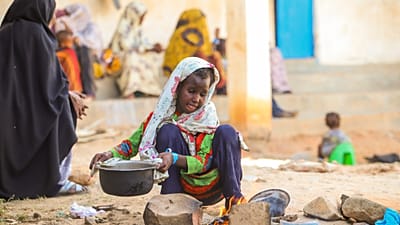
Al-Huda temporary camp in Kenya is now a home of sorts to these displaced people.
Families fled fighting in October in the Ethiopian town of Moyale, across the border from its Kenyan namesake.
They are trying to rebuild daily routines in temporary shelters and the homes of local residents.
The violence is rooted in a longstanding boundary dispute between Ethiopia’s Oromia and Somali regional administrations.
The conflict monitoring organization ACLED traced the latest fighting to an October 18 confrontation over an administration office and a flag raised in a disputed area.
But for mothers like Shukria Dalacha, the roots of the violence are not her main concern.
Instead, she worries about having enough milk for her newborn.
Her family does not know when they can return home.
“I have been here for the last 10 days and have not returned to my hometown. We decided to move to Moyale because of our safety. However we are yet to receive assistance from any institution or organization. We are in desperate need of help,” Dalacha says.
"We have faced many challenges since fleeing our homes. We came here on foot late in the night, running for our lives, and arrived with very little. We do not have bedding materials, and our living conditions are extremely difficult. I am also struggling to breastfeed because I am not producing enough milk for my baby, who needs special attention and care. We have no source of income. Since we are on the run for our lives, we do not have the means to sustain our families. I am appealing for assistance, particularly access to milk for my baby,” she adds.
Around her, families line up for assistance, share meals and register with aid workers.
Food, somewhere to sleep and medical care have become pressing concerns for people who left much of their lives behind.
For some, the first support came from strangers who opened their homes.
Seventy-year-old Kerko Mohammed is staying with a Kenyan host after fleeing Ethiopia.
They have shared food and water, but she says their resources are limited. Her family still needs bedding and other supplies.
“The fighting between Somali and Oromo communities forced us to flee as we could hear gunshots piercing the walls of our houses. We had no choice but to escape, and in the process, we suddenly became homeless,” she says.
That generosity has helped sustain people arriving across the border.
But households sharing their homes and food are becoming overstretched, according to Henok Ochalla, a senior emergency coordinator with the U.N. refugee agency.
"When a conflict like this erupts, mainly women and children are affected, and these are the most vulnerable members of the population, members of the society," he says.
"Quite a good number of women are pregnant, a big number of women are lactating mothers, a big number of the population are children under five. Their immediate needs are essential, critical, medical being one of it, nutrition is key, we need to make sure there is normal nutrition in this site where we are.”
At displacement sites, aid workers distribute blankets, sleeping mats, jerrycans and mosquito nets.
Ochalla's team has been supplying the refugees it cares for with three meals a day.
But he is worried that if the crisis grows, resources will be stretched too thinly.
“Our prayer is for the numbers to remain within what we could handle with the dwindling resources that we have, with the limited capacity in terms of financial resources that we have, we will not be able to respond to a larger population. Otherwise, if the numbers need to increase, we are still reaching out to our donors to be able to come to our aid, give us some resources for us to be able to respond to the needs of the population,” he says.
The UNHCR had profiled some 14,000 people by November 6 as part of an ongoing effort to establish who had arrived and what help they needed.
The figure was not a total count of those who had crossed into Kenya.



01:48
World leaders face pressure to act at COP31 as climate warnings intensify
01:23
Kenya discharges last Ebola patient, begins 42-day countdown to being declared Ebola-free
00:56
Ethiopia's coffee exports fetch more than $870 million
02:12
Up to 50,000 Ethiopians flee to Kenya as clashes escalate
02:31
Ethiopia: Reusable sanitary pads help girls break the silence around menstruation
01:09
Thousands of Ethiopian Jews mark holy day of Sigd in Jerusalem