



af-debates
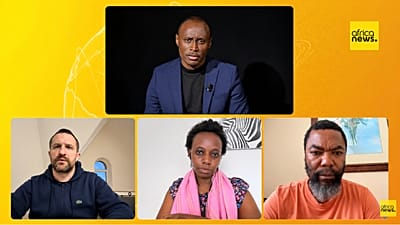
Russia's growing influence in Africa is raising questions about whether its partnerships are delivering real economic benefits, as analysts debate the balance between Moscow's political ambitions and African countries' development needs.
Russia's expanding relationship with Africa is facing renewed scrutiny over trade, investment and security cooperation, following a summit in Moscow that brought together representatives from 48 African countries.
Speaking on Africanews Debates, three experts offered differing assessments of the partnership, questioning whether stronger diplomatic ties are translating into meaningful gains for African economies and ordinary citizens.
One of the biggest concerns is trade.
Russia pledged in 2019 to increase its annual trade with Africa to $40 billion. But during the debate, the current figure was put at around $29 billion, well below that ambition.
Andrey Maslov, Director of the Centre for African Studies at HSE University in Moscow, acknowledged the challenges but argued that trade figures alone do not capture the relationship's potential.
He said greater investment in African markets would be essential to expanding economic cooperation.
"The next move maybe in this regard is investment," Maslov said.
He identified logistics, food security, healthcare and education as areas where Russia could strengthen its presence, pointing to opportunities in infrastructure development, fertiliser production and scholarships for African students.
Maslov also argued that competition from China and growing domestic production in African countries were influencing Russia's trade prospects.
Africa must negotiate harder, says South African researcher
Dr Mikatekiso Kubayi, a senior researcher at the University of Johannesburg, argued that African governments should use growing international interest in the continent to negotiate stronger economic agreements.
He said the continent should not expect Russia to replace traditional partners such as the United States, but should instead pursue opportunities with multiple countries.
"Russia is a partner. It's not a partner that replaces the United States," Kubayi said.
He stressed that African governments must negotiate for greater investment, technology transfer, joint research and local industrial development.
With Africa's population projected to grow significantly by 2050, Kubayi said creating jobs and economic opportunities should remain central to negotiations with foreign powers.
He also argued that Russia should be assessed according to the specific economic and technological opportunities it can offer, rather than being expected to meet all of Africa's development needs.
Russian influence in the Sahel raises questions
Beyond trade, the discussion examined Russia's expanding security partnerships in the Sahel, particularly in Mali, Burkina Faso and Niger.
Beverly Ochieng, Associate Director at Control Risks, said Moscow had successfully built on existing anti-Western sentiment in parts of Francophone Africa to strengthen its political influence.
"Russia did not manufacture anti-Western sentiment," she said, explaining that dissatisfaction with former Western partners had created opportunities for Moscow.
However, Ochieng questioned whether Russia's political visibility reflected its actual economic weight on the continent.
She also raised concerns about Russian involvement in regional media networks and the difficulty of obtaining reliable information about security developments in parts of the Sahel.
The discussion became particularly pointed over whether Russian military assistance was helping African countries build independent security capabilities or creating new forms of dependence.
Maslov defended Russia's role, saying its military personnel operated alongside national armed forces rather than independently controlling territory.
"The decision making is theirs," he said, maintaining that Russia provides technical support under agreements with African governments.
Ochieng challenged the sustainability of such arrangements, warning that the continued involvement of foreign forces in active military operations could make it harder for national armies to become self-reliant.
She also questioned the transparency of some security agreements, describing their terms as difficult to scrutinise.
Are ordinary Africans benefiting?
Another central issue was whether agreements between Russia and African governments were producing improvements in people's lives.
Ochieng said government-to-government partnerships often prioritised political and strategic interests, particularly in countries facing serious security threats.
She argued that African governments ultimately bear responsibility for ensuring foreign investments create jobs, support local communities and contribute to economic development.
Without strong institutions and accountability, she warned, investment agreements may fail to deliver wider benefits.
Kubayi similarly stressed that African governments must take responsibility for negotiating agreements that serve their citizens rather than relying on foreign partners to determine development priorities.
A partnership built on politics or economic results?
Looking ahead, Ochieng predicted that Russia's relationship with Africa would remain strategically important but economically limited compared with the involvement of China, the European Union and other major partners.
She suggested Moscow's influence would continue to rely heavily on political relationships rather than large-scale economic investment.
Maslov rejected the idea that the partnership should be judged by which side benefits more.
"This is not a zero sum game," he said.
"The more Russia benefits, the more Africa benefits. That's how we perceive it from our perspective."
For the three experts, the debate highlighted a broader challenge facing African governments: how to turn growing competition among global powers into stronger economies, greater independence and tangible benefits for their populations.

00:51
Nigeria's Dangote looks to expand IPO access to exchanges across Africa
01:49
Global travel could hit record levels despite wars and rising fuel costs
Go to video
What Europe can learn from Africa’s mobile banking success
10:00
Niger: Algerian military personnel have arrived in Agadez [Africanews Today]
02:18
UN peacekeeping mission in Western Sahara ends after 35 years
00:52
Ghana holds talks with Russia to build first nuclear power plant