



news
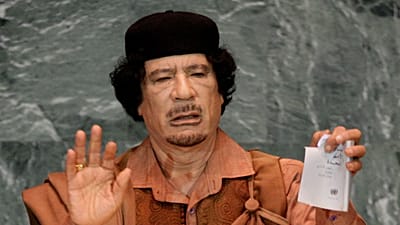
Fifteen years after the fall of Muammar Gaddafi, Libya remains deeply divided. Hopes for stability following the 2011 revolution have given way to a prolonged political, institutional and security crisis, fuelled by the existence of two rival centres of power.
Recent violence has highlighted the country’s fragility. In the east, General al-Mansouri, an intelligence official aligned with Field Marshal Khalifa Haftar, was assassinated. In the west, drone attacks targeted strategic energy infrastructure in Zawiya.
A division that has proved difficult to overcome
Libya’s political transition has failed to reunify the country. General elections that were expected to take place in late 2023 never happened, while rival factions have strengthened their positions over the years.
Administrations, armed groups, economic networks and local officials have developed their own interests. Reuniting the state would now require power, resources and positions of influence to be redistributed.
At the same time, political parties, which multiplied after the 2011 revolution, have lost much of their influence. Several political figures and qualified professionals have also distanced themselves from a political environment marked by rivalry and instability.
Oil keeps the two sides economically linked
Libya’s oil-based economy illustrates the country’s paradox. Much of its oil production comes from areas controlled by Khalifa Haftar’s eastern camp, while the main institutions responsible for managing oil revenues are based in Tripoli.
Despite their political rivalry, the two sides therefore remain economically dependent on each other. The distribution of oil revenues allows the system to continue functioning without genuine political reunification.
Fifteen years after the revolution, this arrangement is helping preserve a status quo that benefits several powerful actors. For ordinary Libyans, however, it continues to push the prospect of a unified, stable state capable of meeting the aspirations that emerged in 2011 further out of reach.
Go to video
Military aircraft with 32 people on board crashes in southern Nigeria
Go to video
A new UN Chief, an old institution and a world in crisis
00:55
Oil prices fall as G7 agrees to release 100 million barrels of reserves
01:23
Libya's pay strike rallies teachers across divided nation
01:26
Netanyahu praises passengers who helped avert disaster on Israel-bound flight
01:14
Mali: more than 2,400 schools remain closed as insecurity disrupts new school year