



Republic of the Congo
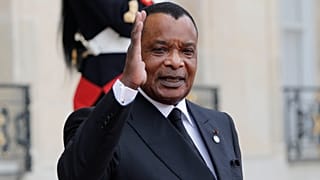
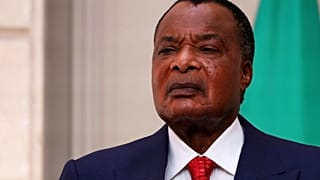
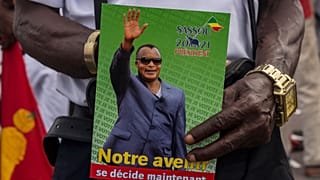
Congo-Brazzaville voted on Sunday in an election expected to extend 82-year-old President Denis Sassou Nguesso's more than four decades in power in the oil-rich central African country.
Six candidates stood against Sassou Nguesso but the main opposition was divided and largely absent, leaving him set to win another five-year term.
The former paratrooper colonel is already one of Africa's longest-serving leaders, along with Equatorial Guinea's Teodoro Obiang Nguema Mbasogo and Cameroonian President Paul Biya.
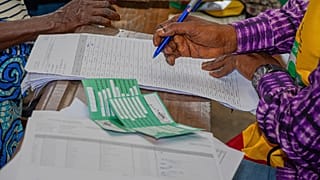
Observers said voter turnout could reach a record low. AFP reporters saw ballot boxes just half full at some polling stations when they closed at 6:00 pm (1700 GMT).
The president toured the country during the election campaign, backed by the ruling Congolese Workers' Party (PCT), urging voters to come to the ballot box.
He voted in the morning in the Ouenze district of the capital, accompanied by soldiers and greeted by hundreds of supporters.
Persecution claims
The few voters who did arrive mostly refused to be filmed or give their names.
One elderly woman did speak out, saying: "Denis Sassou will win."
"It's normal for a citizen to go vote who thinks, 'I chose President Denis Sassou Nguesso, he's the one who will bring peace'," said Georgine, who works for the ruling party.
But in the opposition district of Bacongo, Vivienne, 33, said like numerous other locals that she would "never vote."
"This is far from a democracy," she told AFP.
"Here, if you complain, they arrest you. I just want a president who will put an end to our difficulties. Five more years of Sassou Nguesso is a death sentence."
Sassou Nguesso stressed the issue of security during his final election meeting in Brazzaville Friday, attended by thousands of enthusiastic supporters.
While he can claim to have brought some stability to the country, rights groups regularly accuse him of persecuting opposition activists.
Two opposition figures who featured in the 2016 election campaign, General Jean-Marie Michel Mokoko and Andre Okombi Salissa, are both behind bars, jailed for 20 years for supposedly being a "threat to internal security."
Oil and gas
During his election campaign, the president underlined his economic record, having pushed to modernise the country's infrastructure and develop the gas and agriculture sectors in a bid to make the country self-sufficient.
Oil and gas provide most of the state revenue, driving growth that is estimated to be 2.9 percent for 2025.
Nevertheless, more than half of the country lives below the poverty line.
The government's critics say the country's growth has been sapped by massive amounts of state oil revenue syphoned into the bank accounts of senior officials.
The government has already been the target of several criminal complaints and investigations, notably in France.
While Sassou Nguesso's re-election seems assured, the constitution forbids him from running again in 2031, raising the question of a possible handover.
He told AFP he would not remain "in power forever" and that the young generation would get its turn. But he would not name anyone in particular as a possible successor.
Sassou Nguesso first led Congo-Brazzaville under a one-party system from 1979 to 1992 before losing the first multi-party elections, whose winner he then overthrew in a civil war in 1997.
He was re-elected in 2002, 2009, 2016 and 2021 in votes the opposition said were neither transparent nor democratic.
02:25
In a Congo village, presidential campaign deepens generational divide
02:19
Dusty reels, living history: Volunteers fight to save Congo’s TV archives
01:58
Congo heads into March 15 vote as turnout looms over Congo election
01:04
Presidential candidates hold last campaign rallies in Congo
02:24
Congo president says he will not 'remain in power forever'