



Somalia
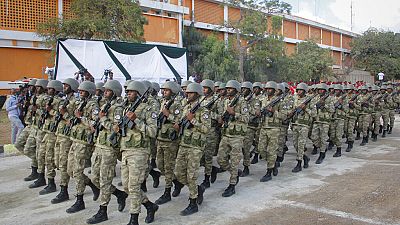
The Somali army will be able to take over from the African Union forces expected to leave the country at the end of 2024, assured Tuesday Somali President Hassan Sheikh Mohamoud, who considered the results obtained in the offensive, currently on pause, " encouraging ". against the radical Islamists Shebab.
Launched in August 2022 in the center of the country, this offensive against the group affiliated with al-Qaeda, which has been leading an insurgency against the Somali authorities for 16 years, has made notable progress but has stalled in recent months.
The Somali army, associated with clan militias, benefited from the support of the African Union force (Atmis), to retake large areas of the territory, particularly in the center of the country.
Atmis made up of troops from Burundi, Djibouti, Ethiopia, Kenya, and Uganda, was due to begin a second phase of withdrawal in September, with the departure of 3,000 troops, but the Somali government requested and received a three-month postponement.
“It coincided with a moment when we had some setbacks (...) and we had difficulty reorganizing ourselves,” recognized Hassan Cheikh Mohamoud on Tuesday during a conference in London organized by the think tank Royal United Services Institute.
"But now we are ready. We can take over in December," he added, specifying that this withdrawal also concerned the security of the Somali presidency.
Asked about possible new deadlines that his government could ask for by the end of 2024, he assured that "we will not do it", the country being in the process of making up for its lack of trained soldiers.
"We are in a better situation than before, and in 2024, while the phased withdrawal will continue, we will also create more forces (...) We are very confident that we will be able to take responsibility for the security of the country", insisted Hassan Cheikh Mohamoud, who was in London to attend a summit on world food security.
And he reiterated his government's determination to initiate a "second phase" of its offensive, "in the southwest and in (the state of) Jubaland", a historic Shebab stronghold. “The situation in the fight against the Shebab is encouraging,” he argued.
“I think we will defeat the Shebab militarily soon,” added the leader, while warning that “eliminating” the “ideological” aspect of the Islamist movement would take longer, particularly in areas that have remained under the group’s control for a long time.
Supported by the international community, the government mainly controls cities, including the capital Mogadishu. Shebab remains established in large areas of the south and center.





Go to video
At least 50 soldiers killed in jihadist attack on Malian army base
01:01
Niger blames France for inciting failed mutiny, Paris denies involvement
01:47
UN General Assembly adopts new world map that shows Africa's true size
01:03
Somalia: Fighting breaks out on outskirts of Baidoa
Go to video
Nigeria confirms planned withdrawal of US troops sent to help tackle insecurity crisis
01:05
Opposition urges African Union to intervene in Zambia's disputed election