



Libya
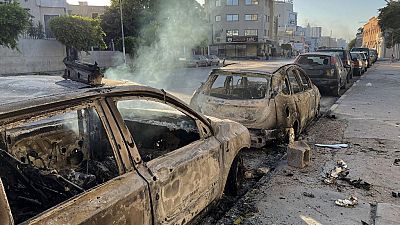
The United Nations expressed concern on Monday about fighting and a telecommunications blackout in Benghazi, the major city in eastern Libya controlled by the camp of strongman Khalifa Haftar.
Telecommunications networks have been cut off since Friday in Benghazi, where fighting broke out the same day in the residential district of Salmani between Marshal Haftar's forces and a group loyal to a rival, Colonel al-Mahdi al-Barghathi, who has returned to his city after years in exile, according to media reports and information shared on social networks.
Colonel al-Barghathi and several of his relatives, described by the pro-Haftar media as a "cell of saboteurs", were arrested and taken to an unknown location, according to the same sources.
These reports could not be confirmed immediately by independent sources.
This violence took place a month after floods killed more than 4,000 people in eastern Libya, particularly in the city of Derna, sparking popular discontent with the authorities.
In a press release, the United Nations Support Mission in Libya (Manul) expressed its "concern at the armed clashes in Benghazi which have resulted in civilian casualties, according to unauthenticated reports", reminding "all parties of their obligations to protect civilians".
The authorities in the east must "urgently restore telecommunications in Benghazi, which were cut off when the clashes broke out", added Manul. Since the fall of Muammar Gaddafi, who was killed in a popular uprising in 2011, Libya, plagued by fratricidal violence and division, has been governed by two rival executives: one in Tripoli (west), headed by Abdelhamid Dbeibah and recognised by the UN, and the other in the east, embodied by parliament and affiliated to the camp of Marshal Haftar, whose stronghold is in Benghazi.
On Monday, Mr Dbeibah asked the Attorney General to open "a full and transparent investigation" into the "exceptional" events in Benghazi so that "those who endanger the lives of civilians and social peace" are held to account.
He condemned the "armed clashes in a residential area" and "the deliberate and total cutting off of all communication networks (...), isolating Libya's second-largest city from the rest of the world"



Go to video
New rule changes confirmed for 2026 World Cup
Go to video
Chinese man arrested in Kenya with 2,000 live queen ants at Nairobi airport
01:29
South Africa deploys troops in Johannesburg to tackle organized crime
Go to video
Trump says Iran welcome at World Cup despite ongoing war
Go to video
Ex-Congo football chief gets life sentence over $1.1m FIFA funds
Go to video
Jihadist attacks hit Nigerian military bases in northeast