



Central African Republic
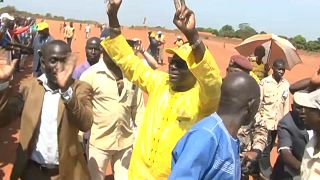
Former President of the Central African Republic François Bozizé will no longer be eligible to contest in the December elections. On Thursday, Bozizé’s candidacy was invalidated by the country’s Constitutional Court.
The court cites his prosecution for assassinations, torture and sanctions by the United Nations for the decision. The former Central African Republic president is a subject of an international arrest warrant issued against him in 2014 for ‘’murder, arrest, kidnapping, arbitrary detention and torture.
In July, Mr. Bozizé had announced his candidacy for the December 27 elections after he was ousted from power in 2013.
UN sanctions
Bozizé is still under sanctions by the United Nations for his role in the 2013 crisis, during which he is accused of supporting the Christian anti-Balaka militias.
At the end of January, he said that “nothing” would prevent him from running as a candidate in the presidential election and that he would ask the UN to consider dropping the sanctions against him.
Bozizé will very likely run against the incumbent Touadera, whose candidacy has not yet been officially announced, even if observers regard it as a certainty.
There have been flare-ups of violence between militias, who often exploit ethnic tensions.
UN experts warned in mid-July that the “prospect of elections has provided armed groups with another reason to maintain and increase their territorial control”.
Their report pointed to an influx of foreign fighters, principally from Sudan, which shares a border with the northeast of the Central Aafrican Republic and regularly sees inter-militia fighting.
01:41
Nigeria's president hails economic reforms ahead of bid for reelection
01:18
São Tomé voters demand jobs and action as young people leave
01:08
Morocco votes in parliamentary election amid youth discontent
01:03
South Sudan: President dissolves govt as controversy engulfs December poll
01:37
Parties intensify campaign as Morocco approaches legislative elections
00:52
South African President Ramaphosa taken ill after BRICS summit