



Nigeria
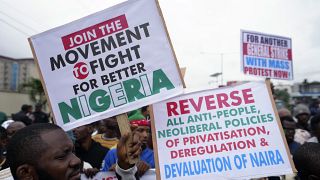
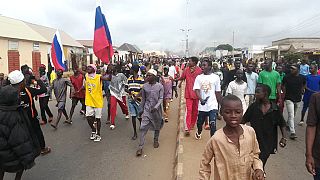
Nigerians in Lagos took to the street on Monday to continue the economic harship protest despite President Tinubu’s plea for suspension of the demonstration.
The protests, tagged “days of rage”, are mainly against Nigeria’s worst cost-of-living crisis in a generation and accusations of misgovernment and corruption in Africa’s most populous country and a top oil producer where public officials’ huge earnings contrast high poverty and hunger levels.
The protesters have also been inspired by other young people in Kenya who held rallies last month to kick against a planned tax hike. Both protests have also featured grievances against governments accused of not meeting the expectations that catapulted them to power.
One of the protesters told the Associated Press says that “the question of dialogue has been raised,” but the government is forgeting that “these protest in itself is a dialogue with the mass of the working people.”
In his Presidential broadcast, Tinubu defended the audacious reforms that were supposed to save the government money and shore up dwindling foreign investments but whose immediate impact has caused hardship.
The reforms, including the suspension of decadeslong and costly gas subsidies and currency devaluations, have had a knock-on effect on the price of just about everything else because Nigerians believe they've been poorly implemented.

01:02
Court martial of Nigerian officers over coup plot to resume in May
00:57
Nigeria sets up court martial over alleged 2025 coup plot
04:39
Nigel Clarke: “Preserving fiscal sustainability must be Africa’s priority” [Interview]
01:16
South Africa inflation ticks higher as education and housing costs rise
00:51
Defendants plead not guilty over 2025 Nigeria coup plot
00:21
Nigeria's Tinubu sacks finance minister in surprise cabinet reshuffle