



Kenya
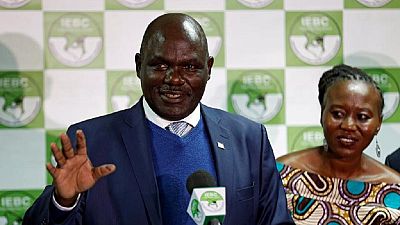
Kenya’s electoral body says it is facing more than 300 court cases from candidates, parties and civil society groups before elections on Aug. 8, raising concern about whether the disputes can be resolved in time.
President Uhuru Kenyatta will once again face his arch-nemesis Raila Odinga, a veteran opposition leader. Kenyatta is the son of Kenya’s first president and the urbane scion of a wealthy family, while Odinga is the son of the first vice-president and a fiery populist.
Any doubts over the legality of the elections could spark protests by candidates contesting presidential, legislative or local seats. Odinga has said that the last two elections, both marred by irregularities, were rigged.
In 2007, he called for street protests, sparking ethnic violence that killed more than 1,200 people. In 2013, when Kenyan government leaders faced charges at the International Criminal Court, he went to court but much of his testimony was dismissed on technicalities.
Paul Mwangi, the head of Odinga’s legal team, said he had lost count of the number of cases they had filed against the Independent Electoral and Boundaries Commission (IEBC).
They have demanded that electronic systems are foolproof and that results announced at constituency level are final to remove the possibility of tampering in Nairobi. They have also lodged a complaint saying the company printing ballot papers is too close to Kenyatta.
The first case will be decided on Friday, the second was lost on appeal and the third was won.
The government argues the legal battles are an attempt to delay the elections and pave the way for power-sharing.
“If that date is vacated, this republic will be thrown into a constitutional crisis,” Attorney General Githu Muigai said before the high court.
Chrispine Owiye, overseeing the electoral body’s legal response, said the flood of cases could indicate a newfound faith in the democratic system.
“We’ve opened up a flurry of complaints because people now believe they can get justice from IEBC,” he said.
The opposition are not the only ones suing. There are 8,000 independent candidates vying for lucrative seats in this election, and many of them have lodged cases. During the last election, there was only 300.
Civil society groups have also filed cases. The Africa Centre for Open Governance wants the voter register to be public.
A KPMG audit report said the register contained irregularities; IEBC says it has addressed these but the centre says it is impossible to tell until the register is public.
“Three weeks to the election, we don’t have the register published,” said Gladwell Otieno, director of the centre. “The reason people are going to court is because IEBC isn’t doing the right thing.”
REUTERS




01:15
Nairobi to host the 2029 World Athletics Championships
01:00
University students launch ‘student list’ to shake up Serbia’s elections
02:31
Nairobi senator Edwin Sifuna emerges as a rising challenger to Kenya's President Ruto
02:36
Cleaner cooking stoves offer hope for 1 billion Africans using wood, charcoal
01:00
Pix of the Day, 10 September, 2026 - Across the world
02:20
Nairobi's street acrobats make a living by performing for motorists