



Health
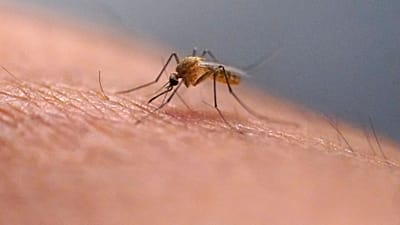
As the West Nile virus transmission season gets underway, the World Health Organization is urging European countries to strengthen mosquito surveillance.
The warning comes as the mosquito-borne infection spreads rapidly across Europe with locally transmitted cases reported in Greece, Italy, Spain, Romania, and North Macedonia.
In Europe, most incidents of the virus in humans occur between July and September when mosquitos are active.
About 20 per cent of infections may cause West Nile fever which is characterised notably by headaches, fever, tiredness, body aches, pain, vomiting, and sometimes a rash.
In severe cases, a person can develop the West Nile neuroinvasive disease that affects the nervous system and which can be life-threatening.
Anyone who develops a high fever, rash, disorientation, tremors, or neck stiffness after a mosquito bite should see a doctor without delay.
There is no vaccine or specific treatment for the virus, with care limited to managing symptoms.
The WHO says while the virus is not a new threat, but the conditions that make it spread are changing rapidly.
“Warmer temperatures and longer summers are giving mosquitoes more time and territory to transmit this virus,” says Dr Hans Henri P Kluge, WHO Regional Director for Europe.
For most people the risk remains low, but anyone living in or travelling to an affected area should take basic steps to avoid mosquito bites and know the signs of severe illness.
The organisation has urged countries to inform the public of protective measures including using a net, wearing clothing that covers most of the body, and making use of mosquito repellent.
One should also limit time outdoors at dawn and dusk, when mosquitoes are most active.
Mosquitoes acquire the West Nile virus by feeding on infected birds and pass it to humans and other animals through bites.
No human-to-human transmission through everyday contact has ever been recorded.



01:10
South Africa water crisis: Over 500 fall ill amid contamination fears
02:11
DR Congo: Ebola outbreak deepens mental health crisis amid stigma and conflict
01:12
At least 10 students die as Ebola outbreak spreads in DR Congo
01:03
Ebola outbreak in DR Congo spreads to new province bordering CAR
01:33
WHO raises alarm over undetected Ebola cases in DR Congo
01:00
Pope Leo XIV has cancerous tumour removed from right lung