



Agriculture
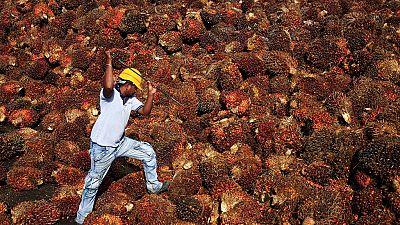
The production of palm oil for use in cosmetics, food, and fuel has become increasingly controversial in recent years.
This is due to large-scale clearing of rain forests in some countries in order to make space for palm oil monoculture, and reduction of orangutan habitat.
However, engineers and scientists from two British universities believe they have a solution that would put an end to this problem.
Palm oil is an edible vegetable obtained from palm tree fruits. The substitute developed by a team from the universities of York and Bath, alongside industry partners Croda, C-TECH and AB Agri, is based on a yeast grown using sustainable-sourced waste feed stocks, such as miscanthus, rapeseed straw, seaweed, and wheat straw.
Lead researcher Dr. Christopher Chuck, from the University of Bath, said they are looking for a wide range of feed stocks.
The researchers have discovered that the yeast known as Metschnikowia pulcherrima can be grown under non-sterile conditions on a variety of agricultural and food wastes.
And with little changes, the yeast can be made to produce a thick oil with virtually identical qualities like palm oil.
The team is concentrating on improving the genetic understanding of the yeast and scaling up the fermentation.
According to Chuck, it takes between three and five days to grow the yeast in a bio-reactor.
“Just by changing the environmental conditions or the strain we can actually direct the oil towards different applications, so we can use the yeast to produce a palm oil substitute. So it has a biomechanical composition very similar to palm oil and therefore it has the same physical possibilities, so it’s as thick as palm oil. We can also direct the yeast towards more rapeseed oil type – potential use for biofuels.”
Although many people are not aware of palm oil, it can be found in around 50 percent of all consumer goods.
Palm oil is very convenient for manufacturers, however, it comes at a huge cost to the world’s forests.
The team is confident they would be able to create a direct replacement for oil, and reduce the environmental issues associated with its production.





11:20
Africa food systems forum: Putting capital where It matters {Business Africa}
01:49
Disappointment as Ivory Coast keeps cocoa price unchanged
02:36
Burkina Faso farmers growing pineapples amid push for self-sufficiency
Go to video
Agriculture: West Africa seeks to speed up the movement of seeds
02:35
Kenyan farmers use fertiliser made by bugs to reverse soil degradation
02:12
Duck brigade replaces pesticides on wine farm in South Africa