



Global conversation
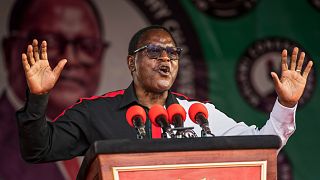
Former Malawian leader Lazarus Chakwera has delivered a blunt warning about the cost of reform in office, saying efforts to tackle corruption can quickly turn leaders into targets.
“The fight you engage in fights back,” Chakwera said in an interview on Africanews’ Global Conversation, reflecting on his presidency and the backlash he faced while attempting to expose wrongdoing.
Elected in 2020 on a reformist, anti-corruption platform, Chakwera said his time in office was quickly overtaken by overlapping crises, from the global shock of the COVID-19 pandemic to a succession of natural disasters, including cyclones and drought, that placed sustained pressure on the economy and livelihoods.
“Each of the four years I had to declare a state of national disaster,” he said, underscoring the scale of disruption faced during his administration.

The former president pushed back against criticism that his reform agenda fell short, arguing that structural change takes time and often clashes with immediate public expectations.
He pointed to legislative efforts aimed at strengthening the fight against corruption, while acknowledging the political difficulty of delivering long-term transformation in a challenging economic climate.
“Sometimes politics is transactional… people want what happens today,” he said, contrasting that with what he described as a slower, more complex reform process.
Chakwera also addressed concerns over delays in appointing a director for Malawi’s Anti-Corruption Bureau, attributing the setback to legal challenges and his decision to adhere strictly to judicial processes. “Once you want to stick truly to the rule of law… it punishes you as well,” he said.
Reflecting more broadly, he said his experience mirrors that of many reformist leaders across Africa, where entrenched systems and resistance to change can slow progress.
“Change is a process,” he said. “No matter how good the laws are, it depends on who implements them.”
Despite losing re-election, Chakwera pointed to Malawi’s peaceful vote and transfer of power as a sign of democratic progress. He described it as evidence that credible elections and orderly transitions remain achievable on the continent, even in difficult circumstances.
Now leading the opposition Malawi Congress Party, he indicated he remains committed to public service, focusing on rebuilding trust and strengthening party structures.
“As former president, I will serve the people continuously,” he said, leaving open the possibility of a future political role.
His remarks highlight a broader reality facing reform-driven leaders: that confronting corruption and entrenched systems can come with political costs, and that meaningful change often extends beyond a single term in office.





00:01
Kenya voter registration drive targets young people ahead of 2027 general election
02:19
Proposed anti-crime wall along Cape Town highway divides residents
01:27
South Africa: 12 police officers charged with corruption appear in court
01:02
South Africa's top cop to be charged in corruption case
Go to video
South Africa arrests 12 senior police officers on suspicion of corruption
00:59
Cameroon delays parliamentary elections, lawmakers to stay until end 2026