



Papua New Guinea
Authorities fear a second landslide and a disease outbreak are looming at the scene of Papua New Guinea’s mass-casualty disaster because of water streams and bodies trapped beneath the tons of debris that swept over a village, a United Nations official said Tuesday.
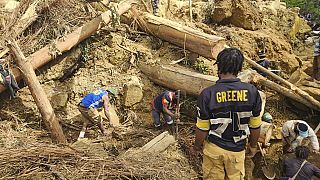
A mass of boulders, earth and splintered trees devastated Yambali in the South Pacific nation’s remote highlands when a limestone mountainside sheared away Friday.
The blanket of debris has become more unstable with recent rain and streams trapped between the ground and rubble, said Serhan Aktoprak, chief of the International Organization for Migration’s mission in Papua New Guinea.
The U.N. agency has officials at the scene in Enga province helping shelter 1,600 displaced people.
The agency estimates 670 villagers died, while Papua New Guinea’s government has told the United Nations it thinks more than 2,000 people were buried.
Five bodies had been retrieved from the rubble by Monday.
Scenes of villagers digging with their bare hands through muddy debris in search of their relatives’ remains were also concerning.
The Papua New Guinea government on Sunday officially asked the United Nations for additional help and to coordinate contributions from other nations.
An Australian disaster response team was scheduled to arrive Tuesday in Papua New Guinea, which is Australia’s nearest neighbor.
It will include a geohazard assessment team and drones to help map the site.
Earth-moving equipment used by Papua New Guinea’s military was expected to arrive soon, after traveling from the city of Lae, 400 kilometers (250 miles) to the east, said Justine McMahon, country director of for humanitarian agency CARE International.
The landslide buried a 200-meter (650-foot) stretch of the province's main highway.
An excavator donated by a local builder Sunday became the first piece of heavy earth-moving machinery brought in to help.
Papua New Guinea is a diverse, developing nation with 800 languages and 10 million people who are mostly subsistence farmers.



01:09
Climate warning: El Niño offers a glimpse of a deadlier, hotter future
01:10
World Rhino Day: Less than 27,000 of the giant animals remain in the wild
00:57
Tunisia says 2026 summer hottest on record, temperatures topped 49.7°C
01:00
Torrential rain and flooding slam Tunis, forcing schools to close
02:19
Sudanese women preserve bridal henna tradition amid war and water crisis
01:46
More than 12 trillion tons of ice lost as climate change accelerates polar melt