In 100 days, Senegal will do something no African nation has ever done: host an Olympic event.
Senegal set to make Olympic history with Dakar 2026 Youth Games
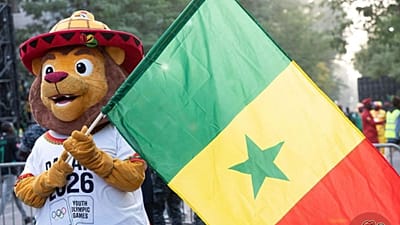
Darkar 2026 mascot holding the senegal national flag
-
Copyright © africanews
@ReportageRFI
The Youth Olympic Games open in Dakar on 31 October. Africa has produced Olympic legends for decades, but has never hosted the Games themselves, until now.
"It is monumental," said Christophe Dubi, a senior International Olympic Committee (IOC) official. He called it the continent's first true Olympic moment, one the whole of Africa can share.
Dakar won the bid back in 2018. The Games were meant to happen in 2022, but Covid-19 pushed them back, giving organisers extra time to prepare.
Events will be spread across Dakar and two nearby towns, Diamniadio and Saly.
"We are ambassadors for Africa"
Thierno Cisse, deputy chief operating officer of the local organising committee, says Senegal understands the weight of the moment.
He told the BBC the country feels a duty to represent Africa well and prove it can meet the highest standards.
Why it matters for young Africans
Africa is the youngest continent on Earth. UN data shows about 70% of people in sub-Saharan Africa are under 30.
That's part of why officials see this as more than a sports event. Dubi called it a powerful symbol and an important first step for the continent.
But many Dakar residents have a more practical hope: jobs.
Senegal's own statistics agency found unemployment among 15-34 year-olds tops 27%. Many young Senegalese have risked dangerous journeys abroad in search of better opportunities.
One resident, Issa Diao, said hosting the Games could genuinely help people find work.
Star power and youth focus
Organisers have brought in big names to raise the Games' profile, Senegal football captain Kalidou Koulibaly, social media star Khaby Lame, and French actor Omar Sy are all serving as ambassadors.
The IOC has also recruited 31 athletes to mentor young competitors during the Games.
Last year, the IOC launched a programme training over 400 young Africans in event operations, logistics and venue management. More than 30 countries are represented among the youth volunteers, most of them African.
A first for refugee athletes in Africa
Dakar 2026 will feature a youth refugee team, a concept first introduced at Rio 2016.
Working with the Olympic Refuge Foundation, the IOC identified young refugee athletes through trials in East Africa. Those selected will also get support with education and wellbeing.
Dubi said the message is clear: even people who've faced enormous hardship can still find hope and a place where they belong.
Smaller Games, big ambitions
The Youth Olympics are more modest than the main Games, around 2,700 athletes will compete across 25 sports, plus 10 non-competitive activities designed to get local kids involved.
Instead of building new venues that might sit unused afterward, organisers chose to restore existing sites. Dubi pointed to two historic Dakar locations that could have been sold off for housing but were preserved for sport instead.
The cost question
Big events come with big price tags. Reports suggest Senegal spent around $270 million building the Abdoulaye Wade Stadium in Diamniadio, where the opening ceremony will take place.
The country's sports ministry has estimated the Games themselves could cost around $60 million to run. Neither the local organisers nor the IOC would confirm these figures when asked by the BBC.
Organisers say the real test of success won't come during the two weeks of competition — it'll be judged years later. Cisse suggested future champions in sports currently unknown in Senegal might trace their start back to these Games.
An African at the top of world sport
Kirsty Coventry, from Zimbabwe, made history last year as the first woman and the first African to become IOC president. She'll oversee Dakar 2026 during her tenure.
Cisse said it's a point of pride, and a personal connection, since Coventry once led the coordination commission for these very Games before her election.
More than a sporting event
The IOC wants Dakar 2026 to be remembered as a cultural moment, not just a sports competition, a celebration of youth and of Africa's rising place on the world stage.
Dubi predicted its impact will reach far beyond Senegal, saying people will be struck by the energy of it all.
As the 100-day countdown begins, hopes are high that Dakar 2026 will do more than make history, it could open real doors for Africa's young athletes, organisers, and communities alike.