The Democratic Republic of Congo (DRC) has officially requested that FIFA reimburse its fans for the 2026 World Cup tickets, as they are now unable to enter the United States due to health restrictions related to the Ebola outbreak.
DRC asks FIFA to refund World Cup tickets over US Ebola travel restrictions
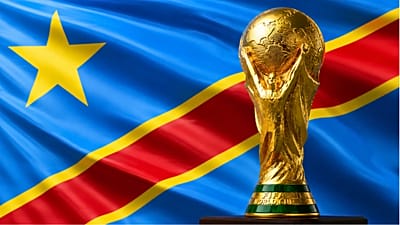
DRC Leopards qualified for the World Cup for the first time since 1974
-
Copyright © africanews
Africanews
For the first time since 1974, the Leopards will return to the world's premier football competition. However, this historic qualification risks being overshadowed by the health crisis affecting Central and East Africa.
Since the World Health Organization (WHO) declared a Public Health Emergency of International Concern on May 16, US authorities have suspended entry to the country for anyone who has been in the DRC, Uganda, or South Sudan in the past 21 days.
More than 900 suspected cases of Ebola reported
According to health authorities, more than 900 suspected cases of Ebola and 223 potential deaths have been reported since the start of the outbreak. The majority of infections are in the DRC.
As a direct consequence, the US Embassy in Kinshasa has suspended its visa services, severely complicating travel for Congolese fans wishing to attend the World Cup.
“We have asked FIFA to take this situation into consideration, as tickets are very expensive,” said Veron Mosengo-Omba, president of the Congolese Football Federation (FECOFA).
“Our fans are being punished when all they want is to support their team. We don’t want them to lose all their money.”
Tickets up to seven times more expensive than in Qatar
The 2026 World Cup, co-hosted by the United States, Canada, and Mexico, is seeing particularly high prices due to FIFA's dynamic pricing system.
Some tickets are reportedly costing up to seven times more than those for the 2022 World Cup in Qatar.
The Democratic Republic of Congo (DRC) is scheduled to face Portugal on June 17 in Houston, in Group K. To comply with US restrictions, Congolese fans would have had to leave the country several weeks in advance.
Faced with this situation, many are now considering attending only the match against Colombia in Guadalajara, Mexico.
When contacted by the BBC, FIFA stated that it would "look into the matter in due course."
As a general rule, the world governing body prioritises ticket resale or transfer rather than refunds, except in exceptional circumstances such as match cancellations.
The national team spared from restrictions
Unlike the fans, the Congolese national team should not be affected by the American measures.
The majority of the 26 players called up by coach Sébastien Desabre play abroad. The staff members based in the DRC have already left the country to comply with the required quarantine period.
The team, however, had to cancel its training camp planned in Kinshasa and is currently gathering in Belgium before heading to its base camp in Texas.
The DRC, formerly Zaire, remains the first sub-Saharan African country to have participated in a World Cup, in 1974.
For Veron Mosengo-Omba, this qualification symbolises a renaissance of Congolese football.
"It's the resurrection of football in this country. Today, people are forgetting their problems to follow the Leopards."
Recently elected to head the Congolese Football Federation (FECOFA) after leaving the Confederation of African Football (CAF), the leader aims to rebuild Congolese football for the long term.
“We want to build solid foundations for the future, even if we don’t expect to win the Africa Cup of Nations or the World Cup immediately.”
This new outbreak is linked to the rare Bundibugyo strain of the Ebola virus, which has been absent for more than ten years.
No vaccine is currently available against this variant, which considerably complicates the fight against the disease.
Health authorities are also facing mistrust from local populations and insecurity in the east of the country, where armed conflicts have displaced tens of thousands of people.
Despite the seriousness of the situation, Mosengo-Omba urges people to avoid generalisations:
“Just because you come from the DRC doesn’t mean you have Ebola.” The Congo is vast, and the country is very familiar with this disease, as we have fought it many times. The world has no need to be afraid.
As the DRC prepares to experience a historic moment on the world stage, the epidemic now threatens to overshadow one of the country's greatest sporting achievements in over half a century.