In a hotel lobby in Dakar, a young man keeps his eyes fixed on the entrance, his back pressed against the wall. He says he has been in hiding since his family rejected him for being gay, and after police questioned a close friend.
“We are living in fear”: Gay people in Senegal amid crackdown
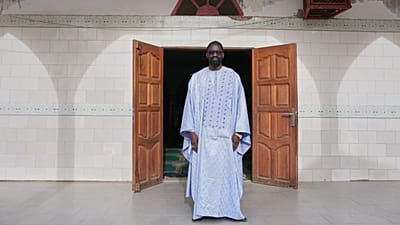
Ababacar Mboup, an activist against homosexuality and founder of And Samm Jikko Yi or
-
Copyright © africanews
AP Photo
Originally from Touba, a city central to Senegal’s Sufi Muslim tradition, he now lives discreetly with another friend who is unaware of his identity. His experience reflects a broader climate of fear in a country where homosexuality is criminalised, and where authorities are now pushing to strengthen those laws.
Accounts like his could not be independently verified, as most individuals spoke anonymously, citing risks of arrest or retaliation.
Push for harsher penalties
Senegal is among more than half of African countries where same-sex relations are illegal. But it is now moving toward stricter enforcement.
Earlier this year, Prime Minister Ousmane Sonko proposed doubling prison sentences for what the law describes as “acts against nature”, a term widely used to criminalise same-sex relations. The proposed amendment would raise the maximum sentence from five to ten years.
Parliament approved the measure on March 11. It now awaits the signature of President Bassirou Diomaye Faye to become law.
Same-sex conduct is already punishable under Article 319 of Senegal’s penal code, a legacy of colonial-era legislation. Enforcement has historically been inconsistent, but recent developments suggest a shift.
Arrests and rising hostility
Local media reports dozens of arrests since February, including that of journalist Pape Biram Bigué Ndiaye, who was later released. Police in Dakar say multiple investigations are ongoing.
Human Rights Watch has warned of escalating anti-LGBTQ+ rhetoric and increasing pressure on lawmakers to impose harsher penalties. Previous attempts to amend the law in 2022 and 2024 had failed.
Public hostility has also intensified. In 2023, a mob in Kaolack exhumed the body of a man believed to be gay and burned it in a public square, an incident widely shared on social media.
Protests and misinformation
In February, protests in Dakar framed homosexuality as a public health threat, with demonstrators accusing LGBTQ+ people of intentionally spreading HIV, claims widely rejected by health experts.
The demonstrations were led by And Samm Djiko Yi, a group campaigning to preserve what it describes as Senegalese values. Its founder, Serigne Ababacar Mboup, argues that homosexuality is incompatible with local traditions and accuses Western countries and international organisations of promoting it.
Growing risks for LGBTQ+ people
Advocacy groups say the environment has become increasingly hostile. Free Senegal, an organisation that helps LGBTQ+ individuals relocate, closed its safe house in Dakar in 2025 after concerns that neighbours could report residents to authorities.
The group says political actors have amplified anti-LGBTQ+ sentiment, particularly during election periods, while resources for protection and support remain limited.
Some individuals have fled the country. One activist, who left Senegal in 2000 after facing backlash over his involvement in a documentary on gay rights, now supports vulnerable individuals from abroad.
“I cannot return,” he said, describing years of threats and social rejection.