A United Nations investigation into the fall of El-Fasher, a key city in Sudan’s western Darfur region, has found that acts committed during its prolonged siege and eventual capture may amount to genocide.
UN probe finds evidence of genocide in Darfur city of El-Fasher
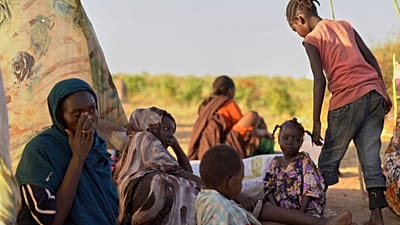
This photo released by UNICEF shows displaced children and families from el-Fasher
-
Copyright © africanews
AP Photo
The inquiry focused on events surrounding the takeover by Sudan’s paramilitary Rapid Support Forces (RSF), which seized control of the city in late October after an 18-month encirclement that cut off food, aid and medical supplies.
Investigators say the tactics used during the blockade, followed by widespread violence once the city fell, point to a deliberate campaign against specific ethnic communities.
According to the UN fact-finding mission, the pattern of abuses documented in El-Fasher included killings, sexual violence, torture, enforced disappearances and the systematic denial of humanitarian relief.
The report concludes that these acts were directed primarily at members of the Zaghawa and Fur ethnic groups, raising concerns that they were carried out with the intent to destroy those communities, in whole or in part.
The findings stop short of a formal legal determination but represent the strongest indication yet from UN investigators that genocidal crimes may have taken place in Darfur since Sudan’s conflict erupted in April 2023.
The war began as a power struggle between the Sudanese Armed Forces and the RSF over plans to integrate the paramilitary group into the national military, but has since expanded into a nationwide conflict shaped by longstanding ethnic tensions and local grievances.
In Darfur, militias aligned with the RSF have been accused of targeting non-Arab populations — echoing violence seen in the region two decades ago during campaigns linked to former president Omar al-Bashir.
Investigators say the extended siege of El-Fasher created life-threatening conditions for civilians before RSF forces moved in, leaving the population vulnerable to what the report describes as days of extreme violence. Thousands of people were reportedly killed or went missing during the assault, with RSF fighters accused of failing to distinguish between civilians and armed defenders.
The mission also named senior RSF figures, including commander Lt Gen Mohamed Hamdan Dagalo, known as Hemedti, citing public statements in which the leadership acknowledged or defended aspects of the operation.
While RSF officials have previously rejected allegations of mass atrocities, the group did not respond to requests for clarification from investigators regarding possible internal accountability measures.
The report further points to the involvement of foreign fighters equipped with advanced weapons systems, though it does not identify specific states believed to be providing support. Previous international investigations have suggested that external backing has played a role in sustaining RSF operations, claims denied by those accused.
UN investigators are now urging the international community to strengthen enforcement of the arms embargo on Darfur, extend it nationwide, and pursue targeted sanctions against individuals suspected of serious violations.
They also called for closer cooperation with the International Criminal Court and the possible creation of an additional judicial mechanism to support prosecutions.
The findings are expected to feature prominently in discussions at the UN Security Council, where diplomatic efforts to broker a humanitarian ceasefire have so far failed to halt the fighting or ease civilian suffering. Human rights experts warn that without urgent preventive action and accountability, the risk of further mass atrocities in Darfur remains high.