More than 100 metric tons of emergency humanitarian supplies are being airlifted into the Democratic Republic of the Congo as UNICEF, the EU and WHO intensify efforts to contain a fast-spreading Ebola outbreak that has already infected more than 120 people.
Race against Ebola: UNICEF, WHO and EU rush aid to Congo
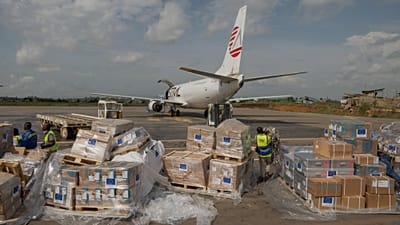
More than 100 metric tons of emergency supplies, from protective gear to medicines and hygiene kits, leave UNICEF’s Copenhagen hub for Ebola-hit DRC.
-
Copyright © africanews
AP Photo
UNICEF has begun airlifting more than 100 metric tons of lifesaving humanitarian supplies into the Democratic Republic of the Congo (DRC) as part of a major emergency response to the escalating Ebola outbreak.
The cargo, transported through the European Union’s Humanitarian Air Bridge, includes protective equipment for health workers, medicines, hygiene kits and medical supplies aimed at containing the spread of the deadly virus.
The supplies were dispatched from UNICEF’s global logistics hub in Copenhagen and are expected to support nearly 100,000 people living in vulnerable communities already affected by conflict, displacement and weak access to healthcare.
“We are in a race against time to contain this outbreak,” said UNICEF Representative John Agbor from Bunia in eastern DRC. “These emergency supplies are critical to help protect frontline workers and support affected communities, including children.”
Ebola cases spread across provinces
As of May 26, health authorities in the DRC had recorded 121 confirmed Ebola cases and 17 deaths linked to the outbreak, alongside more than 1,000 suspected infections.
The rapid spread of cases across several provinces and health zones in north-eastern DRC has raised fears of a wider regional health crisis.
UNICEF said it had activated its highest level of emergency response and allocated more than $6.5 million from its core resources to support urgent operations on the ground.
The agency is working alongside national authorities and humanitarian partners to strengthen infection prevention, logistics, water and sanitation services, community awareness campaigns and direct assistance for affected families.
Community trust seen as key to containment
UNICEF officials stressed that public engagement and local trust remain central to stopping the spread of Ebola.
“Previous outbreaks have shown that building community trust and engagement is critical to the response,” said Gilles Fagninou, UNICEF Regional Director for West and Central Africa.
Health workers are collaborating with local leaders, faith groups, women’s associations and youth organisations to improve awareness, encourage early detection and promote safe practices in affected communities.
EU and WHO strengthen regional response
The European Union and the World Health Organization have also expanded cooperation to support emergency operations in both the DRC and neighbouring Uganda, where Ebola cases have also raised alarm.
The EU announced €15 million in humanitarian funding for outbreak response and preparedness efforts, including €5 million specifically allocated to WHO operations.
European Commissioner Hadja Lahbib said the crisis required “strong international action” and reaffirmed the bloc’s commitment to supporting disease surveillance, diagnostics, vaccine research and frontline medical teams.
WHO Regional Director for Europe Hans Henri P. Kluge described the partnership as an example of effective multilateral action.
“Viruses do not stop at borders — and nor does our partnership,” he said.
The joint response also includes the deployment of medical supplies, expert teams and emergency equipment aimed at strengthening preparedness across the wider region as authorities race to prevent further spread of the virus.