Mohamed Ali Nafti, Tunisian Foreign Minister, doubled down on Wednesday on his country's voluntary returns policy. He said the country still supports the process of voluntary returns "as a mechanism for safekeeping irregular migrants on Tunisian land" rather than forced removals of Tunisian nationals suspected of crimes in Germany.
Tunisian Foreign Minister doubles down over "voluntary return" policy
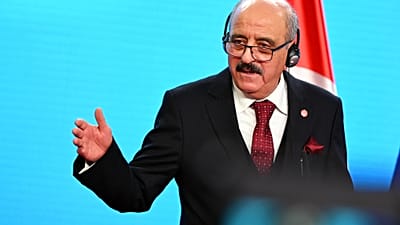
Mohamed Ali Nafti, Foreign Minister of Tunisia, speaks at a joint press conference with Foreign Minister Wadephul at the Federal Foreign Office in Berlin, March 25, 2026.
-
Copyright © africanews
(c) Copyright 2026, dpa (www.dpa.de). Alle Rechte vorbehalten
Tunisia, a major North African has also been a stepping stone for migrants from other countries trying to reach Europe at risk of their lives. "We have done what we can, and have taken the responsibility that was forced on us," Nafti said in reference to the issue.
Tunisian security forces have ramped up efforts to prevent migrants from reaching or crossing the sea — a journey that can be deadly. As of the end of February, 432 migrants arrived in Italy after embarking off Tunisia’s coastline, according to the UN refugee agency.
The beginning of 2026 ranks as the deadliest start to any year for people trying to cross the Mediterranean — an unprecedented 682 confirmed missing as of March 16 — according to the United Nations’ International Organization for Migration.
But the real death toll is almost certainly much higher.
Human rights groups are increasingly struggling to verify tolls as Italy, Tunisia and Malta have quietly restricted information on migrant rescues and shipwrecks along the deadliest migration route in the world.
The news barely makes headlines, in part because the lack of transparency prevents journalists from confirming reports.