Rain fell for the first time in months in Iran's capital on Wednesday, providing a brief respite amid an intense drought.
First rain of autumn falls in Iran's capital after months of intense drought
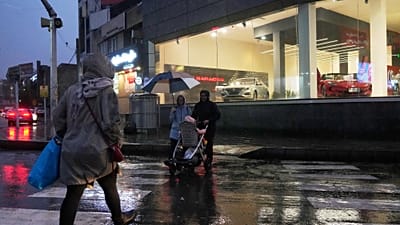
People cross a street during a rain in Tehran, Iran, 10 December 2025
-
Copyright © africanews
AP Photo
"I'm very happy. When I stepped outside this morning, I suddenly felt joyful," said Tehran resident Jafar Seyed Esmaili. "It really lifted my spirits."
Meteorologists have described this autumn as Iran’s driest in over 50 years, further straining a system that expends vast amounts of water inefficiently on agriculture.
The drought gripping Iran has seen its president Masoud Pezeshkian warn the country it may need to move its government out of Tehran by the end of December if there's not significant rainfall to recharge dams around the capital.
The current water crisis has even become a political issue in Iran. This summer, Israeli Prime Minister Benjamin Netanyahu offered his country's help to Iran, a nation he launched a 12-day war against in June.
Water shortages also have sparked localised protests in the past, something Iran has been trying to avoid as its economy struggles under the weight of international sanctions over its nuclear program.
"I am very grateful to my Lord, who opened the door of His mercy upon us, allowing us to witness this blessed, abundant rain," said Brian Shad Doust, a Tehran resident.
"Last year, we really suffered from severe water shortages — it was extremely dry, we practically had no water at all. Seeing the rain for the first time this season, we thank God a thousand times."
Geography, policy and climate change
The drought has been a long subject of conversation across Tehran and wider Iran, from government officials openly discussing it with visiting journalists to people purchasing water tanks for their homes.
In the capital, government-sponsored billboards call on the public not to use garden hoses outside to avoid waste. Water service reportedly goes out for hours in some neighborhoods of Tehran, home to 10 million people.
Iran, straddling the Middle East and Asia, long has been arid due to its geography. Its Alborz and Zagros mountain ranges cause a so-called “rain shadow” across much of the nation, blocking moisture coming from the Caspian Sea and the Persian Gulf.
But the drain on the country's water resources has also been self-inflicted. Agriculture uses an estimated 90% of national water supplies. Recent drought years have not led to policy changes.
Meanwhile, climate change likely has accelerated the droughts plaguing Iran, according to World Weather Attribution, a group of international scientists who study global warming’s role in extreme weather.