A growing exotic pet trade has conservationists calling for stronger regulations to protect the reptiles, birds and other animals in the wild that are increasingly showing up for sale on internet marketplaces and becoming popular on social media.
Conservationists push for tighter controls as exotic pet trade surges online
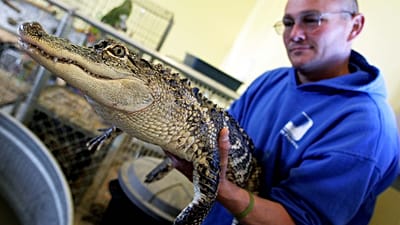
Conservationists are raising fresh concerns as the exotic pet trade rapidly expands across social media and online marketplaces.
-
Copyright © africanews
AP Photo
The two-week Convention on International Trade in Endangered Species of Wild Fauna and Flora is scheduled to run through Friday in Samarkand, Uzbekistan. Several proposals related to the pet trade will be considered Tuesday.
Participants have proposed tighter regulations or complete bans on the trade of several species including iguanas from the Galapagos Islands, more than a dozen species of Latin America tarantulas and an odd-looking turtle from Africa.
In the past, the trade was dominated by sales in animal parts like elephant ivory and tiger bones. But the International Fund for Animal Welfare said live animals for the pet trade are increasingly turning up on the internet.
Several of the species proposed for greater protection at the CITES conference are in Latin America, where an IFAW report last year found illegal trade is on the rise.
The report, covering 18 Spanish speaking Latin American countries, says there were more than 100,000 animals seized or poached from 2017 to 2022, with seizures increasing every year.
The report found the live pet trade accounted for a growing piece of the trade, with reptiles representing about 60% of the animals, while nearly 30% were birds and more than 10% were amphibians.
Many animals were traded locally or regionally but there also was evidence of animals shipped to collectors in Europe, Asia and the United States.