People in South Sudan began registering on Saturday to vote in the first general elections since the country’s independence from Sudan in 2011.
South Sudanese start registering to vote ahead of first national elections
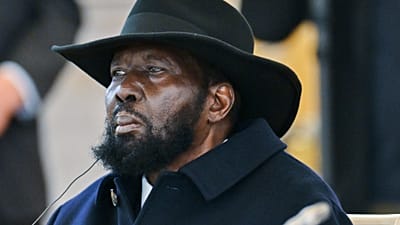
South Sudan's President Salva Kiir at the Russia-Africa summit, Moscow, Russia, 30 October 2026.
-
Copyright © africanews
AP Photo
Initially scheduled for 2015, the authorities have postponed the polls twice before and extended the transitional period several times.
Voting is scheduled to take place on 22 December, but several local media reported on Saturday that this has been moved to 11 February.
There have been concerns from regional and international partners over the country’s readiness to hold credible elections in December amid ongoing violence and political tensions.
Former vice-president Riek Machar, President Salva Kiir’s main opponent, has been under house arrest since March 2025, accused of "crimes against humanity".
A bloody civil war between the forces of the two men between 2013 and 2018 led to more than 400,000 deaths.
At a news conference on Friday, the chairman of the National Electoral Commission, Gabriel Bol Deng Majok said registration will close on 28 November.
"The … exercise shall be conducted throughout the 10 states and three administrative areas at all 3,161 registration centres,” he said, adding that more than 22,000 staff were recruited for the operation.
Deng said poll-related equipment had arrived in the 10 federal state capitals and the three administrative zones where the elections will be held.
But, it is expected to take several more days to reach some centres further afield shortening registration time in those areas.
He encouraged all eligible South Sudanese citizens to participate in the exercise and “demonstrate their democratic right to register and vote".
Deng urged election committees, security agencies, political parties, civil society organisation, community leaders, and the media to “support public awareness and facilitate an inclusive registration exercise”.
According to the World Bank, some 90 per cent of the 15 million inhabitants have no state-recognised identification, which threatens to complicate their registration.
"If someone does not have an ID, especially in villages, paramount chiefs and other community chiefs can identify that person. We also have identification forms for this purpose," Deng said.
He said that after registration closes on 28 November, the commission will publish a preliminary register showing how many people are eligible to vote.