The Ebola outbreak comes at a particularly dangerous moment: 26.5 million people across the Democratic Republic of the Cong (DRC) are already facing acute food insecurity, with needs far out pacing the response.
Ebola: WFP steps up food assistance to frontline workers, patients
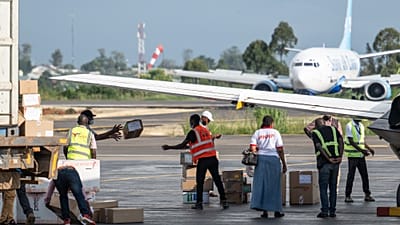
People unload supplies at Bunia National Airport as part of the effort to combat the Ebola outbreak in Bunia, Congo, on Tuesday, May 19, 2026.
-
Copyright © africanews
Copyright 2026 The Associated Press. All rights reserved
Almost ten million people are already facing crisis or emergency levels of hunger (IPC 3 and above) in the eastern DRC provinces (Ituri, North Kivu, South Kivu and Tanganyika). Even small disruptions can push families deeper into hunger.
Ituri is one of the most severely food insecure hotspots in DRC in 2026, with an estimated 1.7 million people – more than a third of the population -facing crisis or worse levels of hunger (IPC 3+), including over 500,000 people in IPC4.
World Food Program is provising life-saving food and nutrition assistance to patients, survivors, contacts, and affected households.
Malnutrition seriously weakens the body’s defences, leaving vulnerable communities far less able to fight Ebola and increasing the risk of severe illness and death.
Food insecurity in eastern DRC did not start with Ebola. It was already at critical levels due to conflict and displacement and now risks worsening still with Ebola.