2025 has been targed as one of the most busy election years across Africa. From West to East, voters went to the polls in several countries, while in others, elections exposed deeper questions about democracy, power and political transition.
Elections that kept power in the same hands: Africa 2025 in review
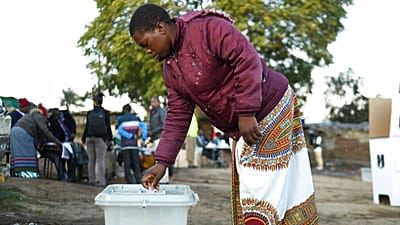
A Malawian casts vote in Blantyre, Malawi Tuesday, June 23 2020. Polls have opened
-
Copyright © africanews
Thoko Chikondi/ThokoChikondi2020
in all, one key element out was not just who won, but how power was retained, reshaped or legitimised, often by incumbents, former military rulers, or dominant parties.
Here’s a look at the major presidential elections that took place in Africa in 2025 and the political dynamics.
Gabon: from coup leader to elected president
Gabon’s election in April was one of the most closely watched in Africa.
Former general Brice Oligui Nguema, who led the 2023 coup that ended the Bongo family’s decades-long rule, won the presidential election with an high majority. The vote formally ended the transition period and returned the country to civilian rule, at least on paper.
While supporters framed the election as a reset after years of political stagnation, some critics argued it mainly legitimised military power through the ballot box. Still, the election marked a rare case where a coup leader sought public approval rather than ruling indefinitely by decree, a common feature in Africa.
Malawi: competitive politics returns
Malawi’s September election stood out for a different reason.
Incumbent president Lazarus Chakwera faced a tough race centred on economic hardship, inflation and public frustration. Voters turned out in large numbers, and the contest was widely seen as open and unpredictable.
The election reinforced Malawi’s reputation as one of Southern Africa’s more competitive democracies, where incumbents can lose and institutions still matter.
Seychelles: a rare second-round showdown
In Seychelles, the presidential election went to a runoff, highlighting political pluralism in the island nation.
President Wavel Ramkalawan failed to secure an outright majority in the first round, forcing a second vote in October. The tight contest reflected a divided electorate and growing debate over governance, cost of living and accountability.
Runoff elections remain rare in Africa, making Seychelles an exception in a year dominated by landslide victories elsewhere.
Cameroon: power endures despite age and fatigue
At 92 years old, Paul Biya once again secured another term in October, extending one of the world’s longest presidencies.
The election took place amid low voter enthusiasm, opposition complaints and concerns over succession. Biya’s victory reinforced a familiar pattern in Cameroon: elections that change little at the top, while deeper questions about leadership renewal remain unanswered.
Ivory Coast: stability through exclusion?
President Alassane Ouattara won a fourth term in October with a large margin, after several key opposition figures were barred from running.
Authorities defended the process as constitutional, while critics said the exclusions weakened political competition. The election avoided the violence seen in previous cycles, but debates over fairness and inclusivity continue to shape Ivorian politics.
Tanzania: landslide victory, muted opposition
Tanzania’s October general election delivered a massive win for President Samia Suluhu Hassan.
The scale of her victory was striking, but it came against a backdrop of opposition restrictions and allegations of harassment. While the government highlighted stability and economic progress, critics questioned whether the political playing field was truly open.
Guinea: voting after years of military rule
In December, Guinea held its first presidential election since the 2021 coup.
Junta leader Mamadi Doumbouya was widely expected to win, positioning the election as a transition back to civilian rule. As in Gabon, the vote raised a key question facing several African states: does holding elections automatically mean democracy has returned?
Central African Republic: changing rules, familiar faces
Also in December, voters in the Central African Republic went to the polls after constitutional changes allowed President Faustin-Archange Touadéra to seek another term.
The election took place amid security concerns and heavy international scrutiny, reflecting how legal reforms can reshape term limits without necessarily reshaping power.
The presidential elections of this year underscore a persistent tension in African politics between formal democratic processes and the concentration of power. While ballots were cast across the continent, the outcomes suggest that holding an election does not automatically translate into meaningful political change.
Incumbents and entrenched leaders remain dominant
Across multiple countries, from Cameroon to Ivory Coast, sitting presidents leveraged their institutional advantages, name recognition, and control over state resources to secure another term. These victories reflect a broader pattern where longevity in power often trumps electoral competitiveness.
Military influence continues to shape political transitions
In Gabon and Guinea, former coup leaders used elections to legitimize authority, transforming military power into civilian leadership without fully opening the political space. These cases highlight how the line between authoritarian control and democratic legitimacy is increasingly blurred.
Overall, 2025 demonstrates that African elections serve multiple purposes: they can confirm public support, signal political transitions, or legitimize entrenched power. The challenge for 2026 and beyond will be whether elections evolve into tools for democratic deepening, or continue to function primarily as instruments that consolidate authority.