2025 saw African elections dominate many front pages, but military takeovers and attempted coups were just as central to the continent’s political story.
Coups in Africa 2025: Power shifts, failed takeovers and political instability
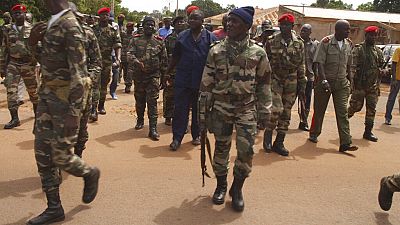
In this Sunday, Oct. 21, 2012 photo, soldiers walk after a failed coup attempt that took the form of an attack by gunmen on a military base near the airport in Bissau, Guinea-
-
Copyright © africanews
STR/AP
From successful putsches to quickly contained mutinies, armed interventions again exposed how fragile constitutional rule remains in several states.
Guinea‑Bissau – November 2025
Guinea‑Bissau’s presidential election on 23 November 2025 was derailed when armed men seized and destroyed key election materials, preventing the completion of the vote.
Around 26–27 November, elements of the security forces moved against President Umaro Sissoco Embaló, took control of institutions and halted the announcement of results, drawing swift condemnation from regional and international actors.
The episode added another chapter to Guinea‑Bissau’s long record of interrupted democratic transitions and left the political climate tense and uncertain into late December.
Benin – December 2025
In Benin, a group of soldiers briefly claimed to have overthrown the government in early December, using the national broadcaster to announce that President Patrice Talon had been deposed. Loyal forces quickly retook control, arrested the suspected ringleaders and described the events as a failed coup attempt with no broad backing in the army. Authorities stressed that constitutional order and day‑to‑day governance remained in place, presenting the episode as an isolated challenge rather than a full‑blown power shift.
Côte d’Ivoire – Tensions around the polls
In Côte d’Ivoire, security concerns and political tensions sharpened in the run‑up to the October 2025 presidential election, amid periodic reports of unrest and discontent within parts of the security forces. Officials insisted that any suspected plots or indiscipline would be contained and that the electoral calendar would proceed, but the atmosphere underlined how anxieties about military involvement in politics persist across the region even without a declared coup.
Sahel juntas – No new coups, entrenched rule
Mali, Burkina Faso and Niger did not experience fresh coups in 2025, but all three remained under military juntas that had seized power in earlier years.
Their leaders deepened security cooperation, including joint anti‑insurgency initiatives, while facing ongoing criticism over delayed transitions, shrinking civic space and the absence of new electoral mandates.
Analysts argue that these entrenched regimes blur the line between military and civilian governance by normalising long‑term army rule without clear democratic renewal.
A year of fragile gains
Taken together, the year underscored that coups and coup attempts remain a real and evolving threat in Africa, even as many countries continue to hold regular elections.
Failed takeovers, like the one in Benin, still reveal deep institutional weaknesses, while successful or prolonged military rule in places such as Guinea‑Bissau and the Sahel reshapes political life and raises questions about the durability of democratic gains.
For many citizens, the danger in 2025 lay not only in tanks appearing on city streets, but also in the gradual acceptance of soldiers as permanent political actors rather than temporary guardians of the state.