



Ethiopia
A volcano in northern Ethiopia erupted on Sunday for the first time in nearly 12,000 years, sending ash plumes up to 14 kilometres into the sky, and across the Red Sea toward Yemen and Oman.
The Hayli Gubbi volcano in the Afar region of Ethiopia erupted for several hours on Sunday leaving the neighbouring village of Afdera covered in dust.
Local administrator Mohammed Seid said there were no casualties but he feared the eruption's economic implications for the local community of livestock herders.
“While no human lives and livestock have been lost so far, many villages have been covered in ash and as a result their animals have little to eat,” Seid said.
The Afar region is prone to earthquakes and a resident, Ahmed Abdela, said he heard a loud sound and what he described as a shock wave.
“It felt like a sudden bomb had been thrown with smoke and ash,” he said.
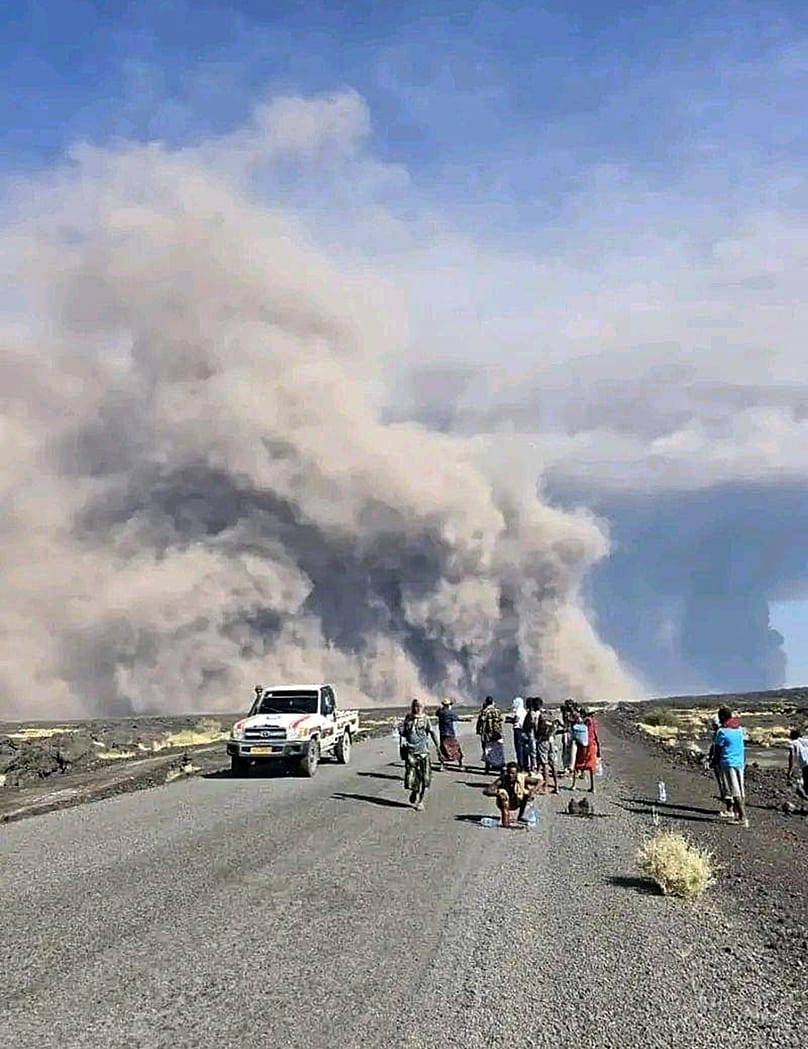
In its latest report on Monday evening, the Toulouse Volcanic Ash Advisory Center said an ash cloud was over northern India and "moving quickly” toward China.
Seid said there was no previous record of an eruption by the Hayli Gubbi volcano.
The Smithsonian Institution’s Global Volcanism Program confirmed Hayli Gubbi has had no known eruptions during the Holocene, which began about 12,000 years ago at the end of the last ice age and is ongoing.









01:59
Women and children bear the brunt of Ethiopia border violence
01:48
World leaders face pressure to act at COP31 as climate warnings intensify
00:56
Ethiopia's coffee exports fetch more than $870 million
02:12
Up to 50,000 Ethiopians flee to Kenya as clashes escalate
02:31
Ethiopia: Reusable sanitary pads help girls break the silence around menstruation
01:09
Thousands of Ethiopian Jews mark holy day of Sigd in Jerusalem