



Tunisia
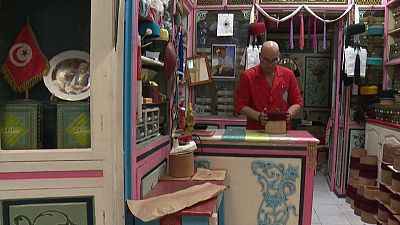
With only a dozen craftsmen still producing the hats in the Tunisian souk, El-Jaoui is one of the last manufacturers of this traditional headdress, a symbol of the North African nations rich heritage.
"After a long manufacturing process, Tunisian artisan and master craftsman Outaiel el-Jaoui hand makes the finishing touches to the "chechia" made from wool: brushing, moulding and ironing them before sale, a trade he learnt from his father at a young age.
"You need a lot of patience. The person's personality must have an artistic spirit in order to work. You have to have control of your hands and fingers", says El-Jaoui.
Master craftsman Outaiel el-Jaoui meticulously prepares traditional "chechias" at his small store in the Ech-Chaouachine — or "chechia" makers’ — souk in the medina of Tunis.
For more than 30 years, he has been selling the hat claimed as the national headwear of Tunisia, and commonly worn across North Africa. Despite the cultural value of these headwears, El-Jaoui has seen the number of manucturers gone down.
"There is less production and the number of artisans is decreasing, a sharp decrease compared to previous years, and even (compared to) since the beginning of the century. The number is decreasing significantly. We have only 10 or 12 craftsmen left at most." added Outaiel el-Jaoui.
Despite the downturn on the number of manufacturers, the Tunisian craftsman strives to preserve national headwear.
Today, he exports his "chechias" to Libya, Niger, Mali, Chad, and also sells to tourists.

![Guitars produced by Congolese craftsmen [The Morning Call]](https://static.euronews.com/articles/631595/320x180_631595.jpg)




01:00
Japan: Tokyo sakura season begins with Ueno Park picnics
02:05
South Africa's traditional circumcision claims dozens of young lives
Go to video
Crowds flock to Antananarivo as Madagascar restores Its pre‑colonial new year
01:00
Dublin St Patrick’s festival draws 500,000 as Irish roots take centre stage
02:41
Migrants vanish at sea as silence deepens in the Mediterranean
00:02
Tunisian lawyer jailed by anti-terror court released from prison