



Paraguay
Altos, a town nestled in western Paraguay, lit up with color, music, and ancestral pride on Monday as residents gathered for the annual Kamba Ra'anga festival—a unique celebration blending Catholic devotion with indigenous and Afro-Paraguayan heritage.
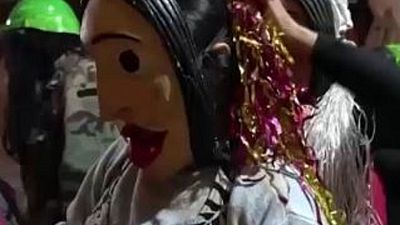
Held in honor of Saints Peter and Paul, the festival is a dazzling display of masked dancers, fire rituals, and symbolic costumes made primarily from dried banana leaves. Among the most iconic figures are the "Guaycurú," men disguised in full banana-leaf attire who chase delighted children, playfully engaging them in mock battles with flaming straw.
Festivalgoers invest weeks of preparation ahead of the celebration.
“We have to look for dried banana leaves, gather a lot, and make one, two, or three (costumes before) the festival,” explained Jesús Ruíz, a devoted participant.
The Kamba Ra'anga masks—carved from wood—are both artistic and symbolic, often portraying animals or exaggerated social stereotypes. The practice dates back to the 17th century, born from a cultural blend of Indigenous customs and the African influences brought by enslaved people during the Spanish colonial period.
For organizer Eugenia Pérez, the event is also about preserving identity and empowering women.
“I don't know how to tell you, but we do this because we don't want it to end. Men have been doing it for a long time, which is why we women, besides having fun, maintain the tradition,” she said in Guarani.
With fire, folklore, and festivity at its core, the Kamba Ra'anga continues to unite generations in a joyful expression of Paraguay's layered cultural history.





01:03
Invasive mosquito sparks malaria fears across Africa
01:08
30 African countries included in permanent visa bond scheme
Go to video
Kenya probes death of 15 elephants at Amboseli park
01:01
Senegal's President Bassirou Diomaye Faye elected new Chairman of ECOWAS
01:03
Gaborone accuses Moscow of luring Batswana to battlefield
01:52
Sierra Leonian women turn to rickshaw driving to survive