Calgary-based First Energy Africa Oil Corp. has appointed capital markets veteran Simon Akit and veteran energy analyst Frederick Kozak to its Board of Directors, strengthening its leadership as Africa's energy sector navigates a rapidly changing investment landscape. The appointments come at a time when oil and gas companies across the continent are rewriting their financing strategies as traditional Western lenders scale back support for fossil fuel projects.
First Energy Africa Appoints Industry Veterans as African Energy Sector Adapts to Funding Shift
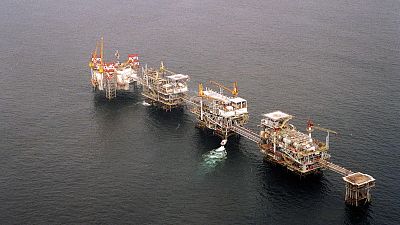
A five-platform complex pumps crude off the coast of Cabinda, Angola's most prolific oil field in this Friday, July 12, 2002 file photo. Angola is joining OPEC, African oil e
-
Copyright © africanews
BRUCE STANLEY/AP2002
Africa's energy industry is undergoing a fundamental shift in how it finances oil and gas development, with access to conventional bank financing becoming increasingly limited amid growing environmental pressures. While traditional funding sources have tightened, industry leaders say the continent continues to attract significant investment by adapting to new investor expectations and emphasizing political stability and long-term governance.
According to the African Energy Chamber, Africa continues to attract approximately US$41 billion in global exploration spending, underscoring sustained investor interest in the continent's resource potential despite evolving financing dynamics.
Akit, who has raised more than US$5 billion in equity and debt financing throughout his career, says African energy companies are increasingly turning to private investors, international investment funds, and regional financial institutions as traditional banking channels narrow.
"It has become more difficult to get funding from the traditional banks we used to rely on," Akit said. "So companies have had to look elsewhere—from private investors, international funds, and local banks. Finding the investment for African energy projects hasn't been a big problem, but to convince these newer investors to say yes, we've had to be more flexible around valuation."
Political certainty outweighs geological potential
While Africa's resource potential remains attractive, Akit argues that today's investors are focused less on what lies beneath the ground than on the stability of the governments overseeing those resources.
"Investors worry about political stability," he explained. "Not just whether the government supports foreign investment today, but whether that support will still exist if a new government takes over."
He added that the greatest barrier to investment is no longer oil prices or geological risk.
"The biggest obstacle isn't oil, or geology, or even price. It's trust. Investors are asking African nations to make a commitment that outlives any single leader or election, because nobody wants to put years of money into something, only to have the rules change halfway through."
Industry observers note that predictable regulatory environments have been central to the success of emerging energy producers such as Guyana, whose consistent investment framework has helped attract billions of dollars in offshore development.
Balancing investor returns with national interests
Kozak, a professional engineer and former oil and gas research analyst with more than 40 years of experience across African and South American resource markets, believes African nations can significantly increase production while ensuring citizens benefit from their natural resources, provided governments strike the right balance between fiscal competitiveness and national development.
"The Guyana lesson is very clear—the country must not give away their resources," Kozak said. "Development of future discoveries should be reasonable for the country with jobs created, industry created, and education of the country's labor force."
He emphasized that governments must create tax and royalty systems that are attractive enough to encourage exploration while still delivering fair returns for both investors and host nations.
"Countries need to have a fiscal regime that makes it attractive enough for companies to do the groundwork for exploration, and attractive enough that if an oil discovery is going to be developed, the company gets a reasonable economic return on their investment."
Industry leaders say achieving that balance will be critical if Africa is to reach its long-term production target of 13.6 million barrels of oil equivalent per day by 2030.
For consumers facing elevated fuel prices across many African markets, executives argue that stronger institutions and consistent investment policies could ultimately translate into greater domestic energy production, economic growth, and improved energy security.
As competition for global investment intensifies, the consensus among industry leaders is that building long-term institutional trust—rather than relying solely on abundant natural resources—will determine which countries successfully convert underground reserves into lasting economic benefits.