Iran's grip over the Strait of Hormuz is throttling the world’s energy supplies and inflicting global economic pain, but a U.S. naval blockade and deepening pressures on its own economy are also testing its ability to withstand the war and defy Washington's demands.
Iran feels economic strain as Strait of Hormuz tensions deepen
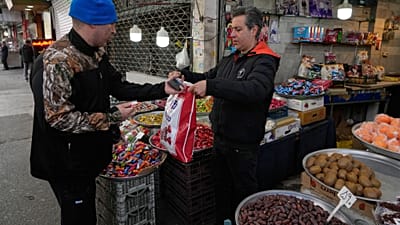
FILE - People conduct their businesses around the traditional grand bazaar of Tehran, Iran, March 29, 2026. (AP Photo/Vahid Salemi, File)
-
Copyright © africanews
Copyright 2026 The Associated Press. All rights reserved
In recent days, Iran and the U.S. have exchanged fire in the Persian Gulf as the ceasefire between the two sides grows increasingly strained and talks appeared to be at an impasse.
Tehran has demanded the lifting of the U.S. blockade and sanctions before entering negotiations over its nuclear program.
Iran's leaders have also insisted that they plan to retain some kind of control over the strategic waterway at the mouth of the Gulf.
Iran has withstood decades of economic pressure and sanctions.
But U.S. and Israeli strikes on key industries and infrastructure inflicted serious damage.
Fallout from the strikes – alongside a monthslong internet cut imposed by the government – is spurring mass job losses and business closures.
Parked beneath an overpass in central Tehran, 56-year-old Hossein Farmani was idling alongside a dozen other taxi drivers waiting for customers.
He popped open the trunk of his car to take out a kettle before pouring himself a glass of tea.
He reflected on the wild price rises in the past year.
Alongside the price of items like a liter of milk, a pound of tea has risen over fifty percent since the war began.
“If things keep heading in this direction, we’re going to suffer a lot more,” Farmani added.
Iranian authorities have announced measures to help Iranians bear crippling prices.
But many of these policies — including a 60% hike in the minimum wage and coupon programs for buying essential goods — are stoking inflation, Taymur Rahmani, an economist at the University of Tehran recently wrote in a leading business newspaper, Dunya-ye Eqtesad.
Since the war began, free bus and metro fares in the capital are also not helping the capital’s struggling taxi drivers.
Another taxi driver waiting nearby, Mohammad Deljoo, 73, said he was supporting his family of two children on a daily income of $4.
He explained there wasn't any shortage of goods in shops — instead, he blamed the real problem on “price gouging”.
“We only buy what’s absolutely necessary, things like bread and potatoes. Even eggs have become too expensive for us,” Deljoo said.
People with his salary can now rarely afford fruit and chicken, he added.
He said the price for tires and other car parts had risen fivefold in less than a year.
Amid waves of job losses and business closures, many Iranians are scrambling to find new ways to make money.
Ali Asghar Nahardani, 32, said the ride-hailing app he works for hadn’t paid in him in over a month.
He said he’d turned to street vending as well, just to cover his living expenses.
“We’re just living day by day, trying to get through this situation while the war conditions continue,” he said.