Three years into Sudan’s war, Kordofan has become the most intense battleground between the army and the paramilitary Rapid Support Forces (RSF), with civilians increasingly caught in a deadly drone war.
Drone warfare intensifies in Sudan’s Kordofan
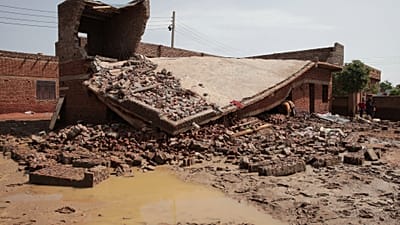
Damage is seen after a heavy rainfall in the village of Aboud in the El-Manaqil district of the Al-Jazirah Province of Sudan on August 22 2022.
-
Copyright © africanews
AP Photo
In South Kordofan’s Dilling, trader Hamed Hamidan says drones are a constant presence. “They never leave the city,” he said, describing the fear they bring. Across the region, near-daily strikes are hitting markets, homes and hospitals, often killing dozens at a time.
The United Nations says more than 500 civilians were killed by drone strikes between January and mid-March alone, highlighting the growing use of advanced yet relatively cheap weapons in populated areas.
Residents in El-Obeid, the capital of North Kordofan, say they can now distinguish between drone types. Smaller “suicide drones” explode on impact, while larger “strategic drones” can travel long distances, carry heavier payloads and return to base.
Both sides are believed to be using foreign-supplied technology. According to Amnesty International, the RSF has access to Chinese-made drones, while the Sudanese army deploys Turkish and Iranian models.
The impact on daily life has been devastating. Aid groups say strikes disrupt food supplies, drive traders away and push prices higher in areas already facing famine risks.
As fighting drags on without a decisive outcome, drone attacks have spread to previously safer areas. In many towns, civilians have adapted to survival routines, fleeing at the first sign of drones overhead, as fear becomes a constant part of life.