



Uganda
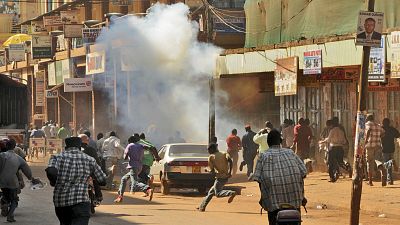
Ugandans protesting the rapidly rising cost of living barricaded streets in the eastern city of Jinja, a major center on the busy highway to the country's border with Kenya.
Police tried to remove molten tires from the middle of the road, according to photos published by the local Daily Monitor newspaper.
The street protests come a day after authorities in the East African country warned of an alleged plot by some "within the country and abroad" to encourage people to stay indoors for three days to protest inflation that has reduced the purchasing value of the Uganda shilling.
"After the (three) days, they claim their alleged protests will transition into open street demonstrations and mass uprisings, to purposely cause change in government. These are illegitimate and unconstitutional means that we do strongly condemn," police said in a statement.
A liter of petrol (gasoline) in the capital, Kampala, is now selling at a record price of over $1.70, or about $6.90 per gallon, and sometimes even higher in other parts of the country.
Kampala's streets are frequently gridlocked during rush hours by buses, minivans and motorcycle taxis but recently have been empty of cars in some areas. It appears many residents have parked their vehicles because of the high cost of fuel and are instead using passenger motorcycle taxis.
Ugandan authorities blame inflationary pressures mostly on the war in Ukraine.
Museveni, a leader in power since 1986, has urged Ugandans to tighten their belts. He drew scorn for a recent speech in which he told Ugandans to substitute cassava for bread, saying the starchy root tuber is a healthy alternative.

00:51
Ghana inflation continues to ease in July as food prices fall
01:11
Ugandan MPs vote to deploy soldiers to Gaza peacekeeping force
Go to video
Ghana opposition protests over claims of ‘democracy under attack’
01:45
Uganda: Military unveils statue of Netanyahu's older brother
01:51
Activists in Kenya demand release of Ugandan opposition leader Kizza Besigye
01:09
S.Africa pushes Africa migration talks after xenophobic violence