



Somalia
Somalia's National Army bring 'total war' to al-Shabab militants.
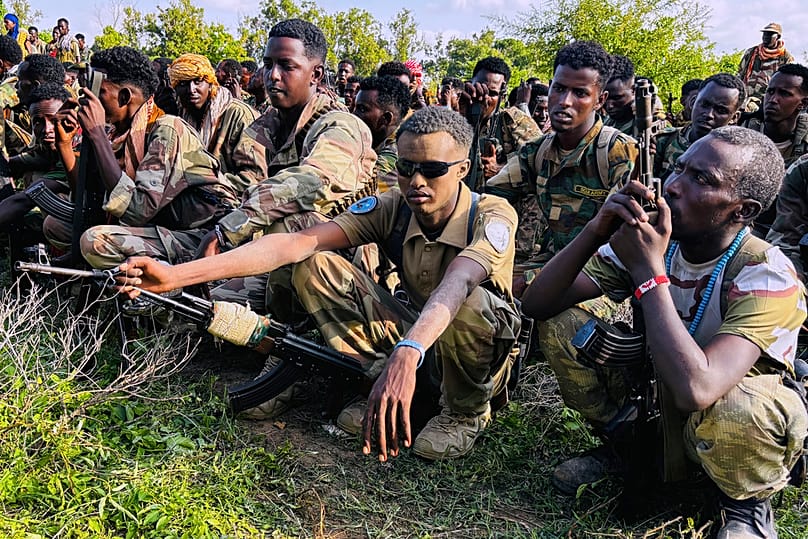
Mogadishu's first line of defense against the next militant attack on Somalia’s capital ranges from machine gunners in pick-up trucks to young men in plain clothes manning checkpoints.
One of the leaders is Abdikani Ali Mohamed, a teenage-faced colonel whose authority has grown in the city as Somalia’s government tries to dismantle al-Shabab networks.
Mohamed's operatives are so suspicious that even an armored vehicle — the ultimate status symbol beloved by important people — triggers alarm if it has not passed through a checkpoint for days.
“What we have clearly understood is these people (al-Shabab) are always evolving,” Mohamed said. “The strategy is always evolving in terms of attack mechanisms and the complexity they are utilising.”
After his election in 2022, President Hassan Sheikh Mohamud declared a “total war” against the militants who oppose his fragile government and are responsible for killing or maiming thousands of people over the years.
He has vowed to attack al-Qaeda-linked al-Shabab militants on the frontlines but also to target its finances and standing among ordinary Somalis.
Somalia has been without a properly functional central government since the overthrow by warlords of the dictator Siad Barre in 1991.
Authorities have said that the effort to stop al-Shabab — an operation backed by African Union peacekeepers and military advisers from countries such as Egypt and Turkey — must be led by intelligence gatherers, putting the National Intelligence and Security Agency, or NISA, at the center of the unwieldy security apparatus trying to keep the federal government operational.
Bombings
The last major attack by al-Shabab came in August 2024 and killed dozens at the city’s Lido beach, although there have been ambitious plots like the failed attempt to assassinate the president in March and a prison attack in October.
Security officials claim success because of the rarity these days of major attacks in Mogadishu by al-Shabab, which is fighting to impose Islamic law in the Horn of Africa nation. The group has ties to al-Qaida.
Attacks by al-Shabab typically involve improvised explosive devices hidden in cars and detonated at strategic locations, especially the gates of popular hotels and government buildings.
The most powerful bombings have killed hundreds of civilians at a time.
Hotels, restaurants, and other places frequented by government officials are now shielded by concrete barriers, while the presidency and most embassies are ensconced in a fortified zone near the airport, whose security is Mohamed's responsibility.
Facing military pressure, including occasional US airstrikes, al-Shabab has retreated to areas of southern and central Somalia that suit its guerrilla tactics.
Lower Shabelle
In parts of Somalia’s Lower Shabelle region – the country’s food basket and now also a battleground in the fight with al-Shabab – confrontations between government troops and the militants have become more frequent in recent months.
There are mixed results for government troops in towns like Bariire, the control of which has shifted multiple times in the past year.
As the holy month of Ramadan came to a close in March, al Shabab fighters overran Bariire, torching homes and forcing people to flee.
Daynab Mukhtar Aden, a 65-year-old mother of six, told The Associated Press that she walked 40 kilometres (24 miles) from Bariire a settlement for the displaced near Mogadishu.
“If we had stayed we would have been killed,” said Aden, a tea vendor who works under a tree next to the shell of what used to be her house.
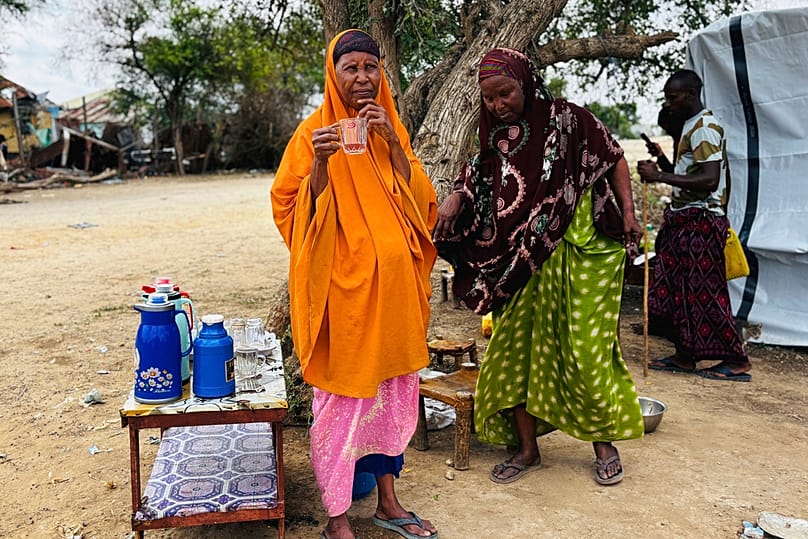
She returned to Bariire only after government troops retook the city and declared it – yet again – liberated.
“I came back because we were told the government will help us rebuild and keep us safe,” she said.
But the fighting had left a trail of carnage.
Al-Shabab fighters were blamed for destroying bridges and effectively impeding easy access to three towns served by the Shabelle River.
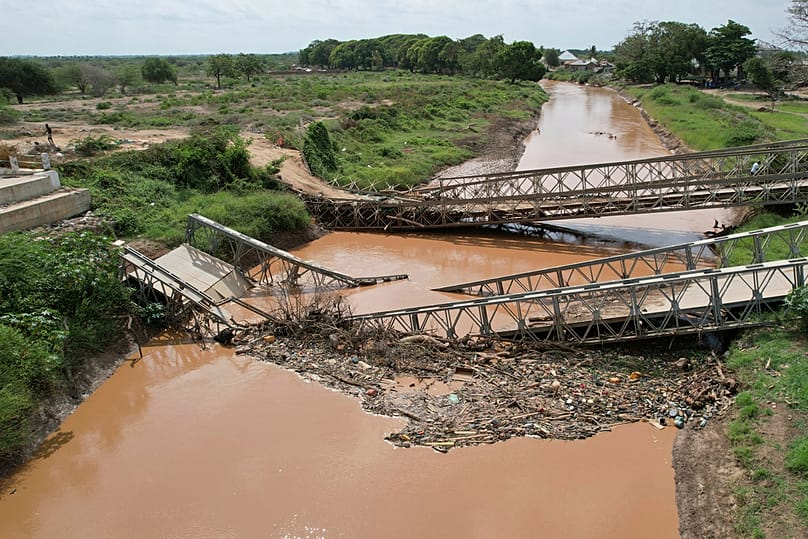
"The enemy fighters (al-Shabab) are sophisticated and skilled in their tactics, which constantly presents new challenges,” said Lt. Col. Abdirahim Mohammed Munye of the Somali military, citing successive victories against al-Shabab in Bariire and the nearby areas of Sabid-Anole and Awdheegle.
“However, with the help of Allah, we hope to gain the upper hand and liberate our country.”
Munye pointed out that degrading al-Shabab in Lower Shabelle - and reclaiming towns like Bariire - is key to securing Mogadishu, where residents see the heavy security presence as reassuring.
There are construction sites across Mogadishu, a city of just under 3 million people.
Cafes and ice cream parlors are sprouting, and at night the neon lights come on in the main thoroughfares, emitting the kind of life that Mogadishu's senior residents hope for.
“Insecurity has been one of our biggest challenges,” said Hajji Abuker Osman, a retiree who regularly comes to have coffee in downtown Mogadishu. “It has really improved now.






00:59
African Union reiterates support for Somalia unity
01:35
No injuries as Somali passenger plane veers off runway after crash-landing
00:07
Mogadishu bowling alley represents cautious return to everyday life
01:13
Turkey to boost its anti-terrorism support to Somalia
Go to video
Jihadist group releases video it claims shows attack on Niamey airbase
02:23
Kenyan court dismisses compensation claim by victims of 1998 Nairobi bombing