



France
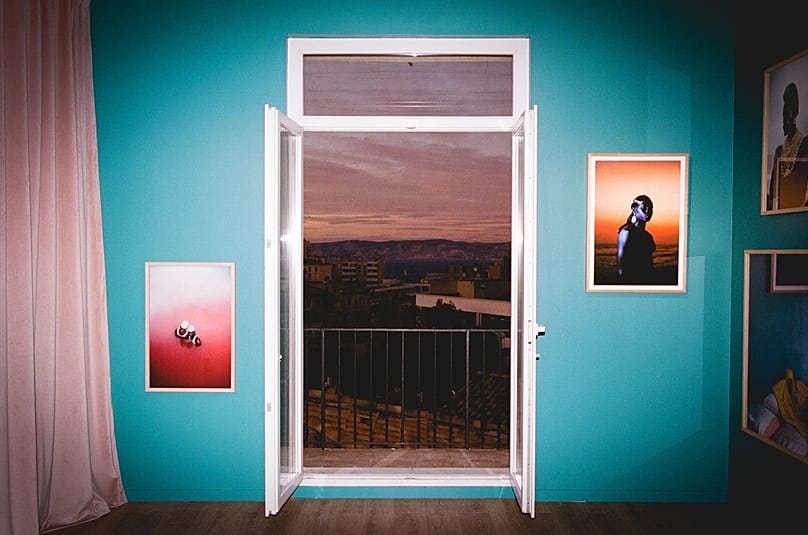
Born in Morocco and raised in Belgium, photographer Mous Lamrabat has made it his mission to explore how cultural symbols shape desire and visibility, particularly for marginalised communities. His new exhibition 'Moustalgia' is on display at the FACES Galerie in Marseille until 18 January.
Mous Lamrabat’s photographs are instantly recognisable. Bright colors, clean compositions, and playful references to pop culture and global brands characterise his work.
But beneath the surface, his images tackle serious questions about identity, representation, and belonging. Born in Morocco and raised in Belgium, Lamrabat has made it his mission to explore how cultural symbols shape desire and visibility, especially for communities that are often marginalised.
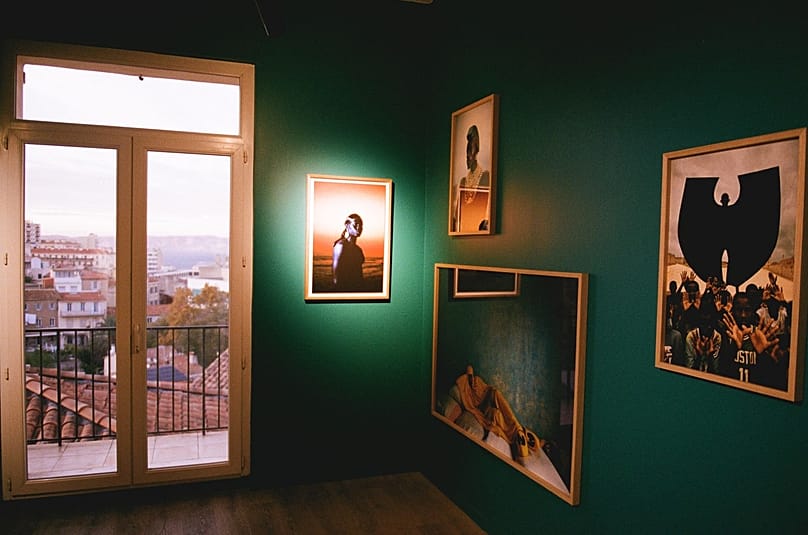
His series Moustalgia is rooted in childhood memory. It draws on the walls of teenage bedrooms covered with posters of superheroes, pop stars, and athletes — figures that shaped dreams and aspirations. For many young people from immigrant or working-class backgrounds, these icons were aspirational but often inaccessible.
“I used to be obsessed with logos when I was like 15, 16," Lamrabat says. "This obsession also stemmed from a sense of lack: we didn’t have expensive shoes or iconic brand sneakers like Nike or Jordan. These objects were idealised, placed on a pedestal. We always made sure the logo was visible, aware of its symbolic value and what it represented. Paying attention to brands was actually a coping mechanism for not being able to access everything we desired. Looking back, I feel deep gratitude, because it was precisely in this context that my creativity awakened.”
Social resonance
That early attention to symbols now informs his photography. Lamrabat often combines global branding with elements of North African and African culture, creating images that are visually striking but also socially resonant. Logos, sneakers, and cultural icons are transformed into tools to question norms, highlight underrepresented communities, and offer new narratives.
Representation is a central concern for Lamrabat.
“Putting Africa in the spotlight remains a crucial issue," he says. "It is painful to witness, but in many European and Western countries, Black and racialised people continue to face persistent forms of marginalisation. Even if rarely stated explicitly, an implicit hierarchy remains. Art then becomes a strategic space: a means of access, a way to assert ourselves. It allows us to claim our place, demonstrate our creative wealth, and declare forcefully: look at what we have, look at what we can produce.”
In Moustalgia, Lamrabat uses nostalgia as a lens to explore who gets to be a hero, whose stories are told, and which images are celebrated. By reinterpreting childhood icons through a multicultural lens, he opens up space for young people to see themselves represented, challenging traditional hierarchies and broadening the scope of visibility.
Beauty and meaning
What sets Lamrabat apart is the combination of aesthetic appeal and social engagement. His photographs are bold, colorful, and approachable, yet they carry a clear message: representation matters. Every image becomes a small act of reclamation, a statement that shifts cultural narratives and encourages a broader, more inclusive view of creativity.
With Moustalgia, Lamrabat doesn’t just look back — he reimagines the visual world, offering new models and heroes that reflect the richness of diverse experiences and identities. Through his work, he demonstrates that photography can be both beautiful and politically meaningful, and that changing the images we see is a step toward changing how we see the world.






01:50
Morocco marks anniversary of Western Sahara occupation as UN mission ends
02:19
Museum focused on Jewish Moroccan heritage opens in Fez
02:19
A theatre festival in Morocco's capital celebrates six women directors
Go to video
James Barnor, who captured Ghana’s independence, wins top photography honour at 97
01:04
Morocco say it remains committed to Western Sahara ceasefire as peacekeeping mission ends
Go to video
Seven decades behind the lens: Ghana's James Barnor receives top photography honour