



South Africa
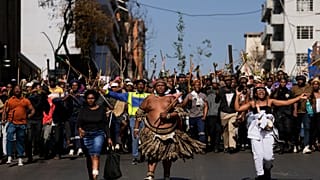
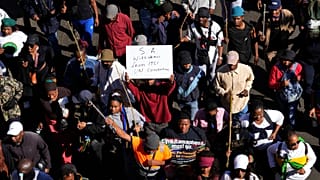
Police in South Africa fired rubber bullets and tear gas to disperse protesters in Johannesburg on Saturday after the crowed breached the G20 summit’s security zone.
Members of the anti-migrant Operation Dudula said they wanted to draw global attention to local challenges, including high crime and unemployment.
The group’s leader, Zandile Dabula, said people were angry and “tired of foreigners” coming into the country and that President Cyril Ramaphosa was not addressing the issue.
"That's why we are here today, because we want him to talk about it. We want those presidents from other countries to advise him to close "your borders so that there's law and order in your country',” she said.
They were joined by supporters of the opposition uMkhonto we'Sizwe (MK) party whose leader is controversial former South African President Jacob Zuma.
The demonstrators were not happy with the designated protest area which was about one kilometre from the Nasrec Expo Centre in Johannesburg where world leaders were gathering.
The group said the distance made their protest “meaningless” and inaudible to the international delegates.
“Everyone knows there are different states' presidents there. So everyone wants to send the message across. But if we are here, who's going to see our message?,” said Ayanda Ndlovu, one of the protesters.
Two Operation Dudula members were arrested with police saying a case of public violence, assault of an officer, and contravention of a court order have been registered against the group.
Dabula told the media the police were misusing their power and are afraid to tackle the issue of illegal immigration.
Africa’s most developed economy attracts migrants from neighbouring Zimbabwe, Mozambique, and Lesotho, as well as from as far away as Nigeria and Ethiopia.
In the year ending 31 March, the Department of Home Affairs deported 46,898 migrants who had entered South Africa without documentation, an 18 per cent increase from the previous year.
Operation Dudula emerged a few years ago and its visibility has grown with mostly young Black South Africans as members.
Its actions have included closing down foreign-owned shops and blocking the children of foreigners from entering public schools.
01:02
Nigeria and Ghana call on AU to address 'Afrophobic protests' in South Africa
01:06
Nigeria repatriates 1,490 nationals from South Africa after xenophobic violence
00:55
Zimbabwe says nearly 100,000 of its citizens have left South Africa
01:10
Collapse of Matlala plea deal complicates South Africa's police corruption case
00:51
UKTriple-murder suspect appears in South African court as extradition process begins
02:07
Nigeria, South Africa row over compensation for deportees