



Brazil
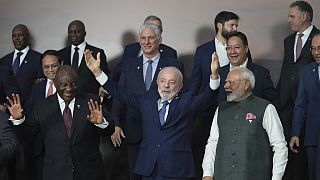
Leaders from the bloc's 11 member countries and invited partners gathered for the last session to discuss global health, climate challenges, and COP30, set to take place in Brazil in November.
Brazilian President Luiz Inácio Lula da Silva opened the session warning that denial and unilateralism are undermining global progress.
“Today, denial and unilateralism are eroding past achievements and sabotaging our future," he said. "Global warming is happening at a faster pace than previously predicted. Tropical forests are being pushed toward their tipping point.”
Lula also emphasized the role of emerging economies in shaping a more inclusive and sustainable future. “We will not be mere suppliers of raw materials. We must access and develop technologies that enable us to participate in all stages of value chains,” Lula added.
Health inequalities were also part of the discussions, with emphasis on how income, education, gender, race, and place of birth continue to determine who gets sick and who dies worldwide. “Many of the diseases that kill thousands in our countries, such as Chagas disease and cholera, would have already been eradicated if they affected the Global North," Lula said.
The summit marked the first BRICS gathering since the group's expansion to 11 members. BRICS was founded by Brazil, Russia, India, China and South Africa, but the group last year expanded to include Indonesia, Iran, Egypt, Ethiopia, and the United Arab Emirates and Saudi Arabia.
In addition to the new members, the bloc has 10 strategic partner countries, a category created at last year’s summit that includes Belarus, Cuba and Vietnam.

00:48
Ivory Coast considers cocoa price cut after Ghana
00:50
IMF approves $91 million in funding for Niger following programme review
01:58
Gabonese opposition and businesses angry about social media ban
01:19
Organisation promoting Central African economic integration suspends activities
01:01
South Africa produces first local vaccine to combat foot-and-mouth disease
01:08
Zimbabwe agrees to staff-monitored programme with the IMF