



Central African Republic
The United Nations is calling for accountability in the Central African Republic (CAR) after it uncovered a pattern of grave human rights violations committed recently by armed groups.
In a report, the Human Rights Office and the UN mission in the country, MINUSCA, said this was fundamental to ensuring such violations never happen again.
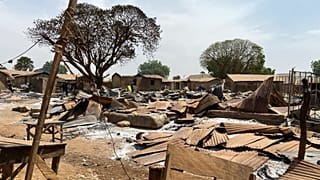
It said at least 24 were killed in two waves of attacks in the Mbomou and Haut-Mbomou prefectures in the Haut-Oubangui, in October last year and this past January, including victims who had been summarily executed.
The attacks were directed and coordinated by elements of Wagner Ti Azandé (WTA), an armed group with ties to the national army.
WTA originally belonged to another armed group called Azandé Ani Kpi Gbé, whose members were also involved in the attacks.
“Armed groups, including one affiliated with the country’s armed forces, committed grave human rights violations, mainly against Muslim communities and Sudanese refugees and asylum-seekers,” said Thameen Al-Kheetan, spokesperson for the UN High Commissioner for Human Rights.
“We have also documented instances of sexual violence, including gang rape, forced labour, torture and other forms of cruel, inhuman and degrading treatment, as well as the looting of homes and commercial stores,” he said.
Al-Kheetan added that these “horrible crimes” must not go unpunished and reiterated the United Nations readiness to work with the authorities to promote and protect human rights and fight against impunity in the country.
Volker Türk, the UN High Commissioner for Human Rights, called for the ties between the WTA group and the army to be clarified and for full transparency regarding the group’s actions.
“If this is not possible,” he said, “the group should be disarmed.”
The CAR has been plagued by decades of instability and communal violence along religious and ethnic lines.
UN assessments suggest that one in five people are displaced internally or outside the country’s borders due to the conflict.
The fighting has also taken a terrible toll on vital infrastructure, including schools and hospitals.
In response to the violence, MINUSCA has intensified efforts to protect civilians and support the restoration of state authority in the affected regions.


01:03
Goma residence not optimistic about peace as MONUSCO chief visits
01:29
United Nations wants 'security guarantees' to monitor DR Congo ceasefire
00:51
South Africa to withdraw troops from UN mission in DR Congo
00:57
Experts warn famine conditions spreading in Sudan's Darfur region
01:01
UN warns Islamic State threat growing, situation urgent in West Africa, Sahel
01:14
UN to deploy ceasefire monitoring mission to eastern DR Congo