



Rwanda
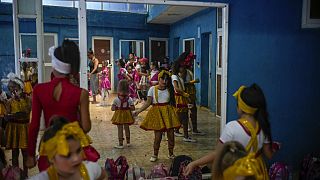
Welcome to the "rafiki" (Swahili word for 'Friend') dance club in central Kigali. Drumbeats set the stage as young men and women try to master the traditional Amaraba dance.
About 30 people, all under 30, move to the sound of the drums with grace and vigour in equal measure under the watchful eye of their mentor.
Eric Rukundo, is a 29-year-old dance coach who has been passing his knowledge onto younger people.
But just like his students, Eric was born after the genocide.
“It is a very ethnically diverse group… but this Rwandan culture unites them,” he says.
Eric believes that such grassroots efforts will help future generations break the ethnic barriers and live as "one people of Rwanda."
Amaraba is one of Rwanda's most famous traditional ceremonial dances.
Rwanda is set to mark the 30th commemoration of the 1994 genocide on April 7.
Over 800,000 mostly Tutsis and Hutus, were slaughtered by radicalized Hutus.
Rwanda's youth now aspires to peace.
“Rwanda struggled while fighting each other, killing each other. Keeping the peace means to understand each other and trying to communicate in a way that everyone will gain efficiently, instead of trying to be selfish and greedy. That is what I understand by peace,” dancer Sarah Uwihanganye says.
Even though the horrors of the 100-day genocide and reconciliation principles have been narrated to all of Eric’s students, many of them say that having their culture also passed down to them as one people will also play a major role in preventing such events in within their generation.






02:20
Young woman becomes first-ever drum master of a Brazilian samba school
01:29
United Nations wants 'security guarantees' to monitor DR Congo ceasefire
01:00
Chad’s Saharan cultures festival brings together desert nations
00:34
Appeal trial of accused Franco-Rwandan genocidaire opens in Paris
01:57
DR Congo city residents forced to adapt during year of M23 rule
01:10
Rwanda nominates former top diplomat for third term as Francophonie head