



Mauritania
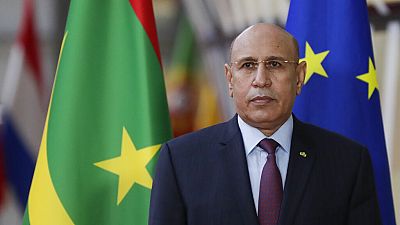
Mauritania's National Assembly passed a new law introducing national languages into primary education, but the text has been heavily criticized by the black Mauritanian community, which fears that Arabic will be imposed on them.
The law introduces for the first time science education courses in mother tongues at the primary level, while requiring the teaching of Arabic to non-Arabs and at least one national language to Arab speakers, according to official documents.
Mauritania's population is made up of Arab-Berber, Haratine (descendants of slaves of Arab-Berber masters, whose culture they share) and Black-Mauritanian communities, generally of sub-Saharan ethnicity (Fulani, Soninke, Wolof).
Cultural hyper dominance
Since the country's independence in 1960, Black Mauritanian communities have denounced what they call the cultural hegemony of Arabic, the official language spoken by the majority of the population, and have called for the their languages to be elevated to the rank of official language. If languages such as Hassanya, Peul, Soninké and French are used in the country, Arabic remains the sole official language.
The National Education Minister Mohamed Melainine Ould Eyih told MPs, the new law aimd to "put an end to the alarming deterioration of the national education system".
According to opposition MP Kadiata Malick Diallo, the new text is a "step forward in that children begin their learning in their mother tongue."
At the heart of the conflict is Article 65 of the new law. It states that "Arabic is to be taught to all children whose mother tongue is not Arabic as a language of communication and as a language of instruction." Black activists from the Organization for the Officialization of National Languages (Olan) haved called out the article which, in their view, "enshrines the linguistic injustice in the country".
Kadiata Malick Diallo suggested an amendment to Article 65 to remove the ambiguity decried by non-Arabs in the text of the law, but her initiative was rejected.
The Organization for the Officialization of National Languages (Olan) said in a statement Tuesday, that two people demonstrating against the new maw were arrested and five injured Monday night during a sit-in in front of Parliament before the adoption of the text.
The sit-in was organized by Olan, organization made up of Black Mauritanian activists, who denounced "the repression" against its activists. The group believes that "Mauritania deprives sections of its population of a fundamental right of cultural expression" with this law.

![Swahili, Africa's answer to a unified continent? [This is Culture]](https://static.euronews.com/articles/548025/320x180_548025.jpg)



01:06
Pacific island nation of Nauru proposes name change in break from colonial past
02:18
Chad's 'At the Heart of Art' festival empowers a new generation of talents
00:59
Nigerian army frees seven children kidnapped from an orphanage
02:18
Circus troupe tackles jihadist nightmares of Burkina Faso's children
02:20
Nigerian Afrobeats star Tiwa Savage nurtures Africa's musical talent
01:46
In Gaza, handmade dolls offer comfort to children after years of war