



Sudan
With the announcement of his resignation on Sunday evening, former Sudanese Prime Minister Abdalla Hamdock throws in the towel just over a month after he signed an agreement with the military.
In a televised speech on Sunday evening, Hamdok admitted that his efforts to bridge a widening gap between political forces had failed and called for political dialogue. Sudanese woke up on Monday with mixed reactions.
Some Khartoum residents such as Mohamed al-Mubarak al-Sediq regretted the departure of the Prime Minister: "We feel that Sudan lost an important personality that was approved by the international community and the Sudanese people. We hope that he will make a come back in the coming period as an independent and become the Sudanese president."
Significant loss
For others like Mohamed al-Amin Dawood, the resignation of the Prime Minister is not a massive loss: "Sudanese women have given birth to thousands of men like Hamdok, so I think the people are not tied to one person only. Sudan is full of patriotic men."
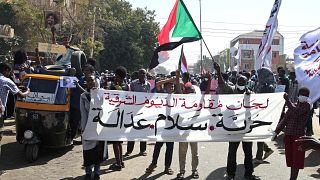
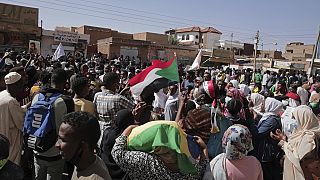
Sudan was navigating a fragile transition towards full civilian rule since April 2019 and the ouster of president Al-Bashir following an unprecedented wave of youth-led protests.
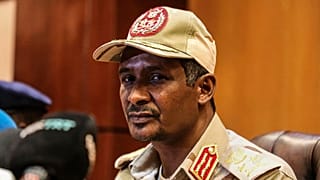
A rocky transition led by Hamdock took on before it was derailed on October 25 when Sudan's new de facto ruler, top general Abdel Fattah al-Burhan, launched a coup, detaining the Prime Minister and his cabinet ministers. Hamdock was eventually reinstated on November 21 as part of an agreement with the military. His resignation leaves the military in full command.


02:20
Beja swords remain 'cherished tradition' in Sudan market
01:00
Two Sudanese women die in migrant boat crossing from northern France
01:00
Pix of the Day, 27 April 2026
01:46
How one surgeon maintained hospital care amid Sudan's conflict
02:07
War-damaged mosque offered shelter during fighting in the Sudanese capital
00:58
Refugee crisis fuels measles and meningitis outbreaks in eastern Chad