



Zimbabwe
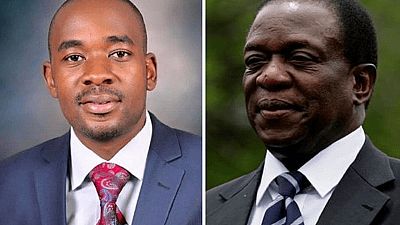
President Emmerson Mnangagwa registered on Thursday for Zimbabwe’s first national elections of the post-Mugabe era, with his main rival Nelson Chamisa hoping to rally younger voters against the generation that won independence.
Western governments and investors will be closely watching the July 30 presidential and parliamentary ballots, for which monitors got clearance to deploy for the first time since 2002.
Mnangagwa and Chamisa, who also signed up on Thursday, are both campaigning on a pledge to revive an economy crippled by a legacy of often violent seizures of land from white commercial farmers and a black economic empowerment drive that targeted foreign-owned businesses.
Those policies were cornerstones of Robert Mugabe’s near four-decade rule, which ended in November after a de facto military coup that transferred power to 75-year-old Mnangagwa, his loyal acolyte for nearly 50 years.
Zimbabwe at crossroads
The ruling ZANU-PF says Zimbabwe is at a critical stage of transition requiring an experienced politician like Mnangagwa.
Chamisa, the 40-year-old leader of the opposition Movement for Democratic Change (MDC), says the president is equally to blame for the country’s economic troubles, since he served in each of Mugabe’s governments since independence in 1980.
Both arguments appear to have struck chords among the 5.4 million-strong electorate, 60 percent of whom are under 40.
While Zimbabwe lacks a reliable polling system, an unofficial survey released last week in its second city Bulawayo by the Mass Public Opinion Institute put Mnangagwa on 42 percent and Chamisa on 31 percent, while 25 percent declined to disclose a preference.
Crucially, Mnangagwa enjoys the backing of the army, which analysts say remains averse to any leader who lacks a pedigree from the liberation war against white rule.
Divided opposition
Chamisa faces the additional hurdle of a divided opposition vote.
Joice Mujuru, a Mugabe deputy for 10 years before she was ousted from the ruling party in 2014, and Thokozani Khupe, who leads a splinter MDC faction after falling out with Chamisa, also entered the presidential race.
Another four lesser-known candidates also registered.
“We have opened up the democratic space and everyone is excited, they feel they can enter the race and contest, which is good,” said Justice Minister Ziyambi Ziyambai, after filing Mnangagwa’s papers at the High Court.
Attempts by Chamisa to have Mujuru and Khupe join the MDC and its alliance of smaller parties have so far failed.
“It is unfortunate that we are in a situation where other parties have not seen the light to say that it is important for opposition forces to unite and rally behind one candidate,” said Jameson Timba, who presented Chamisa’s nomination papers.
If no single presidential candidate wins an absolute majority next month, a run-off is scheduled for September.
REUTERS




01:02
Tensions as Guinea-Bissau freezes ties with Cape Verde over claims of interference
00:58
Guinea Bissau: Military court returns main opposition leader to prison
01:04
Mauritania frees lawmakers convicted over discrimination claims
01:42
Opposition rallies against Tshisekedi's third-term push
02:07
Mixed reactions in Zimbabwe to sweeping constitutional changes
00:53
Former Ivory Coast defence minister released after 'terrorism' charges