



Kenya
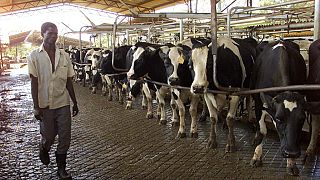
Low-income earners in Kenya can now take bank loans by using livestock, crops and other household appliances as collateral.
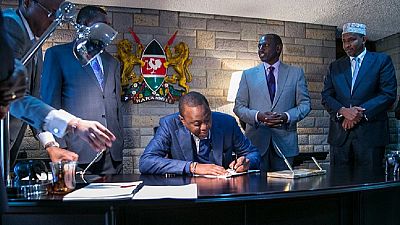
President Uhuru Kenyatta signed into law the Moveable property Security Rights Bill 2017. According to the presidency, the law “enhances the ability to access credit using movable assets.”
‘‘The new law facilitates the use of moveable property as collateral for credit facilities, establishes the office of the Registrar of security rights as well as provides for the registration of security rights in movable property,’‘ the presidency added.
The law will allow especially women, small-scale farmers and young people to secure bank loans as parts of efforts aimed at boosting the economy.
The head of Kenya bankers Association, Halil Olaka, lauded the new law stressing that it was ‘‘a good development for the industry.’‘
Signed the Movable Property Security Rights Bill into law https://t.co/KVgzY1PcKz pic.twitter.com/Eeyf4G0sRf
— Uhuru Kenyatta (@UKenyatta) May 10, 2017
Zimbabwe’s lead
Kenya’s move comes barely a month after the Finance Minister in cash-strapped Zimbabwe tabled a bill in parliament to direct banks to accept livestock as collateral for cash loans to informal businesses.
The Movable Property Security Interests bill, if passed, will just like that of Kenya, legalize the acceptance of livestock and household appliances as collateral after evaluation and registration by the central bank.
Cash shortages hit Zimbabwe last year after the government threatened to grab all foreign companies operating in the country under the Indigenisation and Empowerment Law.
Banks in Zimbabwe were compelled to reduce withdrawal bank limits for customers to as low as US$40 per day per individual.
This has led to hundreds of ordinary Zimbabweans sleeping outside banks daily to get the much needed cash.





01:00
Pix of the Day, 05 March 2026
01:12
Zimbabwe fast-tracked ban over lithium export rush
01:23
Abiy Ahmed insists Ethiopia will not go to war over sea access
00:48
Ivory Coast considers cocoa price cut after Ghana
00:50
IMF approves $91 million in funding for Niger following programme review
01:58
Gabonese opposition and businesses angry about social media ban