



Libya
The rejection of a unity government for Libya by two rival administrations has further aggravated the violence in that country.
That is according to Libyan experts who are also warning of growing threats posed by Jihadists groups operating both in North Africa and Europe.
Unity government aims to save Libya from chaos, Islamic State group, but has to get into country first: https://t.co/rd3LZ114yt
— The Associated Press (@AP) March 18, 2016
“The proposal of a unity government has aggravated the crisis in Libya. It has generated new conflicts between two opposing administrations,” said Mohamed Eljarh, Libyan expert from the Rafic Hariri Center for the Middle East.
The Tunis-based Presidential Council nominated a unity government last month, but recognition of the proposed cabinet has been held up by the failure of the eastern House of Representatives to vote to approve it.
Western nations hope a unity government can help tackle a growing threat from the Islamic State, which has used a security vacuum and political divisions in Libya to establish a foothold in the north African country.
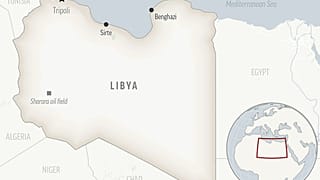
The Presidential Council had announced in Tunis that the government will soon be based in Tripoli despite the capital being controlled by armed militia.





01:18
UN hails Libyan agreement to move toward elections
01:06
São Tomé and Príncipe President Carlos Vila Nova sworn in for second term
Go to video
Zambia's Hichilema sworn in for a second term, Mundubile in jail
01:12
Former French PM Edouard Balladur dies aged 97: family
Go to video
Tanzania’s political crisis deepens after VP resignation
Go to video
Libya: Fifteen years after Gaddafi, country still divided