



Africa
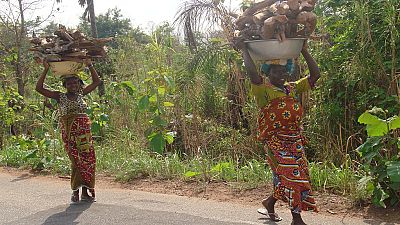
Agriculture is the backbone of most African economies.
Little wonder then that in 2015, African governments continued their push to improve infrastructure and technology for farmers.
According to the World Bank, agriculture contributes 32% to Africa’s GDP and provides employment to 65% of the labour force on the continent.
In many countries in Africa, up to 85% of the workforce is employed in the sector and most of these are small scale farmers.
Agricultural reforms have been happening in the continent albeit slowly. For instance in Nigeria, Africa’s biggest economy, the government embarked on reforms in the sector in order to reduce heavy reliance on crude oil exports, cut back on importation and generate jobs.
Across the continent, governments are being urged to spur growth in the sector while banks are also being encouraged to lend to farmers.
Success Stories
In drought prone Lesotho, a tiny landlocked country in Southern Africa, water from the Katse dam is being used to run a fish farm project that wants to boost the country’s economy and meet demand for trout especially in Asian markets.
“We have a good catchment area, we get low temperature and that suitable for the growth of our product which is rainbow trout.” Mampoi Lerotholi who works at the farm says.
Whereas in Kenya, the use of hydroponics- which is a low cost modern technology to plant is changing the fortunes of farmers in the country.
Hydroponics Revolutionize Farming in Kenya http://t.co/npEpgRjrhZ http://t.co/ODFpDudqsV
— Nafassi com (@MuhammadBey) October 11, 2015
Challenges
However, numerous challenges continue to hamper the sector in the continent.
Lack of adequate capital and severe weather patterns are some of the key challenges that farmers have had to contend with.
Recently, the Food and Agriculture Organisation (FAO) issued a statement saying that the strongest El Niño weather phenomenon in 18 years is set to cause food shortages for about 6.3 million people in drought-stricken Southern Africa in 2016.
The region is experiencing a severe drought, affecting the ‘maize belt’ of South Africa, where a lack of rain had caused crop failure rates of over 50 percent according to the World Food Programme (WFP).
Perhaps the only thing African farmers can do is hope that 2016 will provide better fortunes.
!['African risk premium': AU launches own credit rating agency [Business Africa]](https://images.euronews.com/articles/stories/09/88/02/50/320x180_cmsv2_9d76d6c1-2b03-5474-aa99-1e57811ec937-9880250.jpg)
02:21
Sudanese women preserve bridal henna tradition amid war and water crisis
02:36
Cleaner cooking stoves offer hope for 1 billion Africans using wood, charcoal
Go to video
Colossal energy brings veteran investor Warren Irwin on board as Africa strategy advances
02:19
African languages find new life among a younger generation
01:54
South Africa: Sharpeville massacre victims launch legal action
11:20
Africa food systems forum: Putting capital where It matters {Business Africa}